DHAGA 239 · proverbial saying
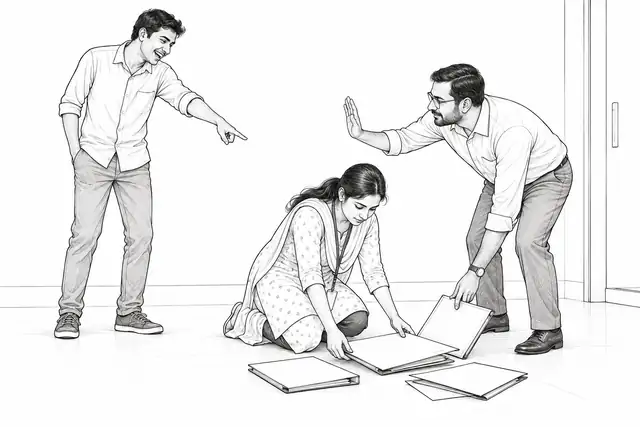
Kicking someone who has fallen
ପଡ଼ିଲା ଉତ୍ତାରୁ ଯେ ମାରସି ଲାତ, ପୁଡ଼ିଯାଉ ସେ ଗୋଡ଼ହାତ
ପଡ଼ିଯାଇଥିବା ମଣିଷକୁ ସାହାଯ୍ୟ କରିବା ବଦଳରେ ଯିଏ ପୁଣି ଗୋଇଠା ମାରେ, ତାହା ପ୍ରତି ଏହି ରାଗ। ଶେଷର ଅଭିଶାପରେ ପ୍ରତିବାଦର ତୀବ୍ରତା ଦିଶେ। ଆମ ପଢ଼ାରେ କଥାଟି ଅସହାୟ ମୁହୂର୍ତ୍ତରେ ଆଉ ଆଘାତ ଯୋଡ଼ିବାକୁ ନିନ୍ଦା କରେ। ଆଜି କାହାର ଅସୁବିଧା ଦେଖି ଅଧିକ ଉପହାସ କରିବା ପ୍ରସଙ୍ଗରେ ଏହାକୁ କୁହାଯାଇପାରେ; ଶରୀରର କ୍ଷତି କରିବାକୁ ଆମନ୍ତ୍ରଣ ଭାବେ ନୁହେଁ।
Literal meaning
Who kicks after someone has fallen—may those hands and feet burn.
What it means
The anger is directed at the person who adds a kick after a fall. The curse gives the protest force: a moment of vulnerability has been used for further harm. We read the line as condemning that cruelty, while preserving its harsh words as the historical quotation rather than a wish to injure someone now. In conversation it can rebuke piling ridicule or blame onto a person already in difficulty. That nonviolent application is editorial; the source’s literal image remains a kick.
When you might use it
Original imagined example: A team member makes a costly mistake and admits it. When others keep mocking him after the problem is resolved, a colleague quotes the saying to stop the piling-on, not to threaten anyone.
Cultural context
The source labels the headword Sambalpur; this does not establish exclusive origin. Curse retained as quoted rhetoric, not endorsed retaliatory violence. No historical incident or speaker identified.