DHAGA 300 · dictionary-labelled saying; source-informed editorial reading
Land and a meal from elsewhere
ଷାଠିଏ ବାଟି ନାହାକିଆଣୀ ପରର ବାଡ଼ି ପନ୍ଦାଡ଼ରେ ମାଗି ଖାଉଛି
ଅଭିଧାନରେ ବହୁ ଜମିର ଅଧିକାରିଣୀ ସ୍ତ୍ରୀଙ୍କୁ ବୁଝାଯାଇଛି। ଉଦ୍ଧୃତି ସେହି ପରିଚୟ ପାଖରେ ପରଘରେ ମାଗି ଖାଇବାକୁ ରଖେ। ଆମ ପଢ଼ାରେ ସମ୍ପତ୍ତିର ବଡ଼ ପରିଚୟ ଓ ସେହି ବେଳର ଖାଇବା ଯୋଗାଡ଼ ମଧ୍ୟରେ ଫରକ ଦିଶେ। ଏହାର କାରଣ ଖୋଲା ରହେ; ସ୍ତ୍ରୀଜଣକ ଠକ ବା ସାହାଯ୍ୟର ଅଯୋଗ୍ୟ ବୋଲି ଆମେ ରାୟ ଦେଉନାହୁଁ।
Literal meaning
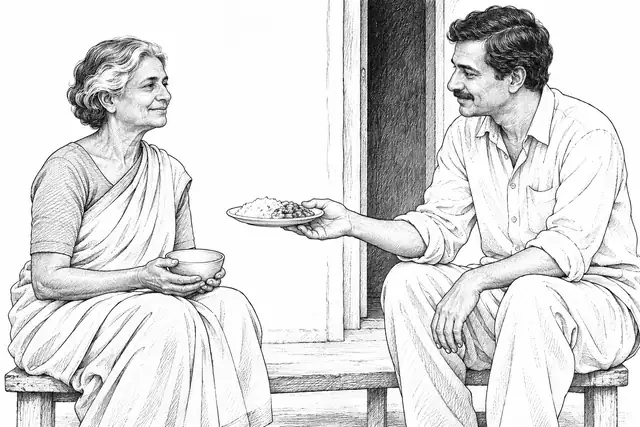
The woman with sixty bāṭi of land asks for food and eats at another’s yard or veranda.
What it means
The dictionary defines a woman with extensive landholdings. The quotation sets that description beside asking and eating elsewhere. Our reading notices a gap between an imposing description of possessions and the immediate means of obtaining a meal. It leaves the reason open rather than declaring the woman dishonest or undeserving.
When you might use it
Original imagined example: କଥାଟି ପଢ଼ି ଜଣେ ପଚାରିଲେ, “ଜମି ଅଛି ବୋଲି ସେହି ବେଳେ ଖାଇବା ଅଛି କି?” ଅନ୍ୟଜଣ କହିଲେ, “ଏଠି କାରଣଟା ଲେଖାନାହିଁ।” / Two readers distinguish owning land from having a meal available and leave the missing explanation unresolved. Their discussion is invented.
Cultural context
The female landowner is the source’s subject. Bāṭi is retained without conversion; the line establishes neither a historical person nor a cause of her request.