DHAGA 221 · proverbial saying
Passing it on after dark
କାଣି କଉଡ଼ି ପିତା ତାଳ, ୟାକୁ ଦେଉଥିବ ରାତ୍ରିକାଳ
କାଣି କଉଡ଼ି ଓ ପିତା ତାଳ—ଦୁଇଟି ଅପସନ୍ଦ ହେବା ଭଳି ଜିନିଷ ସାଙ୍ଗରେ ଦେବାର ସମୟ ରଖାଯାଇଛି ରାତି। ଅଭିଧାନ କଉଡ଼ିଟିକୁ ଛୋଟ ବା ଭଙ୍ଗା, ଆଉ ଭଙ୍ଗା ଅର୍ଥରେ ମୂଲ୍ୟହୀନ ବୋଲି କହିଛି। ଅନ୍ଧାରରେ ଦୋଷ ଭଲକରି ଦେଖାନଯିବାର ସୁଯୋଗ ନେଇ ଖରାପ ଜିନିଷ ଚଳାଇଦେବାର ଶୁଖିଲା ଥଟ୍ଟା ଭାବେ ଏହାକୁ ପଢ଼ିହୁଏ। ଏହା ଆମର ପ୍ରୟୋଗମୂଳକ ପାଠ; ଉତ୍ସ ଅଲଗା ଘଟଣା ବା ବ୍ୟାଖ୍ୟା ଦେଇନାହିଁ। କାହାର ଏମିତି ଚାଲାକିକୁ ଧରି କଥାଟି କୁହାଯାଇପାରେ, ସେହି ଚାଲାକି କରିବାକୁ ପରାମର୍ଶ ଦେବା ପାଇଁ ନୁହେଁ।
Literal meaning
A worthless cowrie, a bitter palm fruit—give these at night.
What it means
Two disappointing things are paired with a convenient hour for giving: darkness. The dictionary identifies the cowrie as tiny or broken and, in the latter sense, worthless shell money. The saying itself gives no explanatory story. One possible reading is a dry joke about passing on something poor when its defects may be harder to notice. The surface instruction need not become our advice: quoted critically, it can expose the attempt to make a bad offering pass for a good one. We do not infer who receives them, or a custom that required such giving.
When you might use it
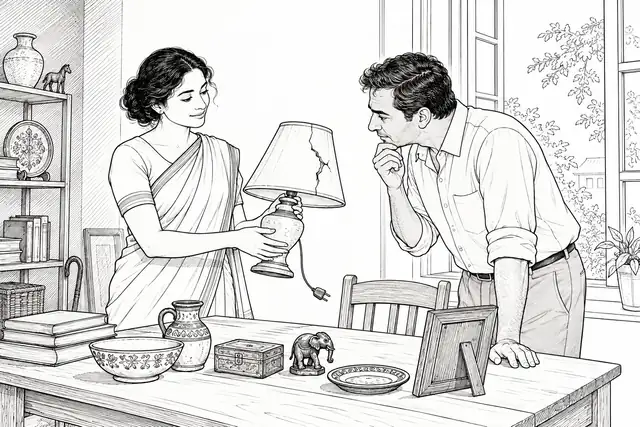
Original imagined example: A friend notices that a damaged second-hand lamp is being shown to a buyer only in a dim corner. They quote the saying and ask that the lamp be brought into the light before anyone decides. This modern scene is an editorial use, not a documented trading custom.
Cultural context
The cowrie is a historical money image in the source gloss. The darkness/deception interpretation is not separately defined there and remains an editorial reading. No specific recipient, ritual, trade practice or origin is supplied. The fruit wording is retained without a botanical or dietary claim.