DHAGA 248 · proverbial saying
Plenty for penalties, nothing for devotion
ଷାଠିଏ କାହାଣ ତଣ୍ଡକୁ ଅଛି, ହରି ଭଗତିକି କଡ଼ାଏ ନାହିଁ
ତଣ୍ଡ ପାଇଁ ବଡ଼ ଅଙ୍କର ଧନ ଅଛି, ହରିଙ୍କ ଭକ୍ତି ପାଇଁ ଅଳ୍ପଟିଏ ନାହିଁ—ଏହି ଅସମାନ ତୁଳନାରେ କଥାର ଖୋଚା। ଅଭିଧାନରେ ତଣ୍ଡର ଅର୍ଥ ଜୋରିମାନାଠାରୁ ବାଧ୍ୟ ହୋଇ କରାଯାଉଥିବା ଖର୍ଚ୍ଚ ପର୍ଯ୍ୟନ୍ତ ଅଛି; ଏଠାରେ କେଉଁ ଘଟଣାର ଖର୍ଚ୍ଚ ତାହା କୁହାଯାଇନାହିଁ। ଆମ ପଢ଼ାରେ, କେଉଁ କାମ ପାଇଁ ଟଙ୍କା ମିଳେ ଓ କେଉଁ କାମ ବେଳେ ଅଭାବ ଦେଖାଯାଏ, ସେହି ବାଛବିଚାରକୁ ଏହା ପଚାରେ। ମୂଳ କଥାର ଭକ୍ତିଭାବ ରହିଥାଏ, କିନ୍ତୁ ପୂଜାରେ ଖର୍ଚ୍ଚ କରିବାକୁ ମଣିଷର ଭଲମନ୍ଦର ମାପ କରିବା ଆମର ଉଦ୍ଦେଶ୍ୟ ନୁହେଁ।
Literal meaning
There are sixty kahans for penalties, but not a small cowrie amount for devotion to Hari.
What it means
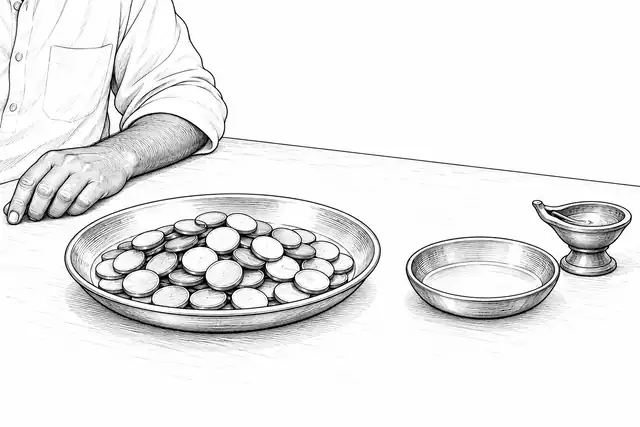
The verse sets a large expense beside a tiny amount refused. Its religious contrast is explicit: money can be found for a penalty or an expense one is forced to bear, yet none is available for devotion to Hari. The dictionary’s separate definition of taṇḍa includes fines and compelled expenditure; it does not tell us what offence, if any, lies behind this line. Our reading hears a reproach about priorities, made memorable by the unequal sums. That reading preserves the devotional voice without making spending on worship a test of anyone’s goodness.
When you might use it
Original imagined example: Two friends discuss someone who readily pays repeated late fees but says there is nothing to spare for a small devotional gathering they had promised to support. One quotes the line as a comment on those priorities. The scene is invented and is not a demand that anyone fund religious activity.
Cultural context
The primary headword explains a large sum in an older cowrie vocabulary. The lexical taṇḍa source is context-only, not a second witness of the saying. No exact modern currency conversion, offence, historic event or duty to donate is asserted.