DHAGA 329 · dictionary-labelled saying; source-informed editorial reading
Rice and the people who serve
ଭାତ ଥିଲେ ଭାତୁଆ ଅପୂର୍ବ?
ପ୍ରଶ୍ନଟି ଭାତ ଥିବା ସହ ସେବା କରିବା ଲୋକ ମିଳିବାକୁ ଯୋଡ଼େ। ଅଭିଧାନରେ ଅନ୍ନ ପାଇଁ ସେବା କରୁଥିବା ବ୍ୟକ୍ତି ଓ ଚାକର ଅର୍ଥ ଅଛି। ଆମ ସମାଲୋଚନାମୂଳକ ପାଠ ପଚାରେ: ଜଣଙ୍କ ଶ୍ରମକୁ କେବଳ ଭୋଜନରେ ମାପିଲେ କଣ ଅଦେଖା ରହେ? ସବୁଠି କର୍ମୀ ସହଜରେ ମିଳନ୍ତି, ଭୋଜନ ଯଥେଷ୍ଟ ପାରିଶ୍ରମିକ, କିମ୍ବା ଖାଇଥିବାରୁ ସେବା ଦେବାକୁ ହେବ—ଧାଡ଼ିଟି ଏସବୁର ପ୍ରମାଣ ନୁହେଁ।
Literal meaning
If there is rice, are people serving for food hard to find?
What it means
The question connects available food with the availability of a servant. The dictionary supplies both serving-for-food and servant senses. Our critical reading asks what is lost when a person’s labour is reduced to a meal. The wording does not establish that workers are plentiful everywhere, that food is adequate payment, or that anyone owes service for being fed.
When you might use it
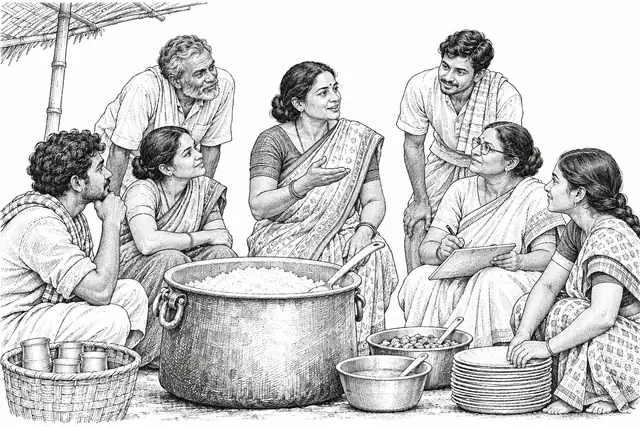
Original imagined example: ଏକ ଆୟୋଜନରେ ଖାଦ୍ୟ ବ୍ୟବସ୍ଥା ହେବା ପରେ ଦଳଟି କର୍ମୀଙ୍କ କାମ, ସମୟ ଓ ପାରିଶ୍ରମିକ ନେଇ ଅଲଗା ଆଲୋଚନା କଲା। / Organizers discuss workers’ time and pay separately from catering. This scene is invented.
Cultural context
This critical response is editorial, not a traditional counter-moral. The source question provides no verified employment custom, universal worker trait or justification of servitude.