
DHAGA 486 · proverbial saying
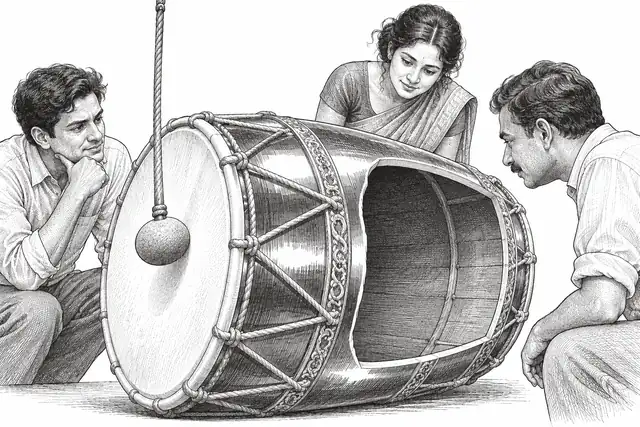
The polished, hollow drum
ଢାଇଁ ଢାଇଁ ଢାଇଁ ବାଜଇ ଢୋଲ
ବାହାର ଚିକ୍କଣ ଭିତର ପୋଲ।
ବାହାର ଚିକ୍କଣ ଭିତର ପୋଲ।
ଢୋଲ ଢାଇଁ ଢାଇଁ ଶବ୍ଦ କରୁଛି; ବାହାରଟି ଚିକ୍କଣ ହେଲେ ମଧ୍ୟ ଭିତରଟି ଫମ୍ପା। ଆମ ପଢ଼ାରେ, ବହୁତ ଶବ୍ଦ ଓ ଆକର୍ଷଣୀୟ ବାହ୍ୟ ଦେଖାଣି ଥାଇ ମଧ୍ୟ ଭିତରେ ସାରବସ୍ତୁ କମ୍ ଥିବାର ଏହା ଏକ ବ୍ୟଙ୍ଗଚିତ୍ର। ଢୋଲର ଗଠନକୁ ଏଠାରେ ରୂପକ ଭାବେ ବ୍ୟବହାର କରାଯାଇଛି।
Literal meaning
Boom, boom, boom sounds the drum: polished outside, hollow within.
What it means
The verse lets the drum make its noise before looking beneath the polished surface. Our editorial reading contrasts an impressive presentation with a lack of substance. Unlike a portrait of concealed malice, the criticism here is emptiness behind the display.
When you might use it
Original imagined example: A proposal arrives with elaborate publicity and a glossy presentation, but little evidence or practical detail. A reader compares it to the polished drum that makes a great sound while remaining hollow inside.
Cultural context
Three repetitions of ଢାଇଁ make the opening perform the sound it describes. The rhyme ଢୋଲ/ପୋଲ then turns attention from what is heard to what is inside.
Recorded variants
ଫମ୍ପା ମାଠିଆରେ ଶବଦ ବେଶି।
Literal: There is more sound in an empty earthen pitcher. ଅର୍ଥ: ଫମ୍ପା ମାଠିଆରେ ଶବ୍ଦ ବେଶି ବୋଲି ପଙ୍କ୍ତିଟି କହୁଛି। ଆମ ସମ୍ପାଦକୀୟ ପାଠରେ ଭିତରେ ସାର କମ୍, କଥା ବା ଆଡ଼ମ୍ବର ବେଶି—ଏହି ଅମେଳକୁ ମାଠିଆର ଚିତ୍ରରେ ଧରାଯାଇଛି। କେବଳ କଥାର ପରିମାଣରୁ କାହାର ଜ୍ଞାନ ବିଚାର କରିବାର ନିୟମ ଏହା ନୁହେଁ। Explanation: The pitcher’s emptiness is paired with its greater sound. Applied editorially to speech, the image questions a display that is louder than its substance: much talk may give little understanding or useful content. The point is to examine what the talk contains, rather than be impressed by its volume.