DHAGA 234 · proverbial saying
Even the wise differ
ନାନା ମୁନିଙ୍କର ନାନା ମତ
ମୁନି ଅନେକ ହେଲେ ମତ ମଧ୍ୟ ଅନେକ ହୋଇପାରେ। “ନାନା”ର ପୁନରାବୃତ୍ତିରେ ମତଭେଦକୁ ଆଶ୍ଚର୍ଯ୍ୟର କଥା ନ କରି ସହଜ ଭାବେ କୁହାଯାଏ। ସମସ୍ତେ ଏକ କଥା କହିବା ଦରକାର ବୋଲି ଜିଦ୍ ଧରିଥିବା ଆଲୋଚନାରେ ଏହା ଟିକିଏ ଅବକାଶ ଆଣିପାରେ। ତଥାପି କେଉଁ ମତ ପଛରେ କି ଯୁକ୍ତି ଅଛି, ସେହି ବିଚାର କରିବାର କାମ ରହିଯାଏ।
Literal meaning
Different sages have different opinions.
What it means
The repetition makes disagreement unsurprising: several thinkers need not arrive at one view. The line can loosen a conversation that has stalled because each side expects complete agreement. It does not tell us that all opinions are equally well supported, or that a decision can be avoided forever. Rather, in our reading, it creates a little room to hear why people differ before choosing what to do. The dictionary supplies “different opinions” and this example; it identifies no particular sages or dispute.
When you might use it
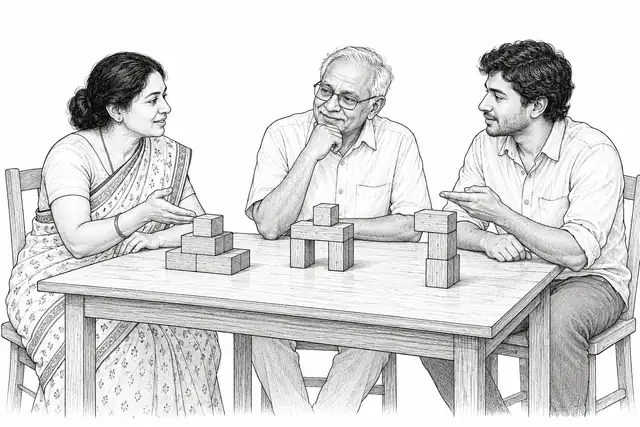
Original imagined example: Three experienced readers propose different endings for a play. The director smiles, quotes the saying, and asks each to explain what their ending would achieve before the group chooses.
Cultural context
No named sages, scriptural derivation or origin established. Acceptance of disagreement is an editorial application, not a claim that all claims are equally true.