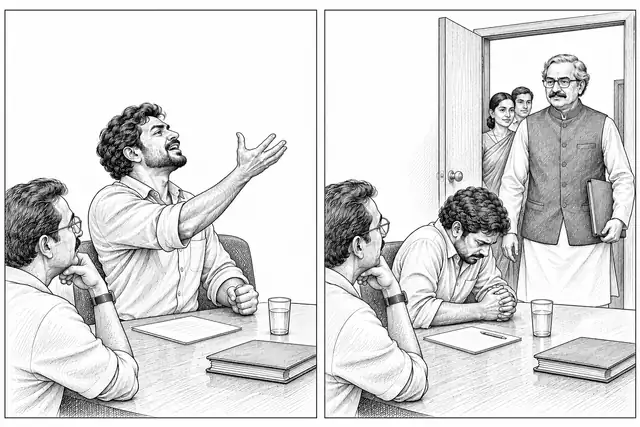
DHAGA 386 · proverbial saying
Bold words, sudden retreat
ଏସା କରେଙ୍ଗା
ତେସା କରେଙ୍ଗା
ସିପାହୀ ଦେଖିଲେ ଶୋଇ ପଡ଼େଙ୍ଗା।
ତେସା କରେଙ୍ଗା
ସିପାହୀ ଦେଖିଲେ ଶୋଇ ପଡ଼େଙ୍ଗା।
କଥାରେ ବହୁତ ସାହସ ଦେଖାଇବା, କିନ୍ତୁ ଅସଲ ପରୀକ୍ଷା ଆସିଲେ ଡରି ପଛେଇଯିବାକୁ ଏହି ବ୍ୟଙ୍ଗ କହେ। ପ୍ରଥମ ଦୁଇ ପଦର ବାହାଦୁରି ଶେଷ ପଦରେ ଭାଙ୍ଗିଯାଏ।
Literal meaning
“I will do this, I will do that”—but at the sight of a soldier, I will lie down.
What it means
The speaker announces one bold action after another, then becomes timid as soon as a soldier appears. The inspected Odia Vasa gloss identifies the target as someone who claims fearlessness in words but loses courage when action is required. The ending punctures the earlier boast.
When you might use it
Someone loudly promises to challenge an unfair decision, but falls silent when the person responsible arrives. The saying could tease that gap between promise and action. This illustration is newly composed.
Cultural context
Hindi-influenced କରେଙ୍ଗା and ପଡ଼େଙ୍ଗା rhyme around the Odia phrase ଦେଖିଲେ ଶୋଇ. The repeated boasts build momentum, and the last line abruptly turns confident speech into a picture of retreat.