DHAGA 259 · dictionary-labelled saying; source-informed editorial reading
Asking the way home
ପଥ ପଚାରି ବାପଘର ଯିବୁ ଆଉ ଅଯୋଧ୍ୟାକୁ ମନ ନ କରିବୁ
ବାପଘରର ପଥ ପଚାରିବା ସହ ଅଯୋଧ୍ୟାକୁ ମନ କରିବାର ବିରୋଧ ରଖାଯାଇଛି। ଅଭିଧାନ ବାପଘରକୁ ବଧୂର ପିତୃଗୃହ ବୋଲି ବୁଝାଏ, ରୂପକ ବ୍ୟବହାରର ବ୍ୟାଖ୍ୟା ଦିଏନାହିଁ। ଆମ ପଢ଼ାରେ ଆକାଂକ୍ଷା ପ୍ରତି ଏକ ତୀକ୍ଷ୍ଣ ପ୍ରଶ୍ନ ଅଛି—ଯାତ୍ରା ପାଇଁ କଣ ଜାଣିବା ଦରକାର? କିନ୍ତୁ ପଥ ପଚାରିବାରୁ କେହି ଶିଖିବା ବା ଯାତ୍ରା କରିବାକୁ ଅଯୋଗ୍ୟ ବୋଲି ସ୍ଥିର ହୁଏନାହିଁ।
Literal meaning
You will ask the way to your father’s home; do not set your mind on Ayodhya as well.
What it means
The line contrasts asking directions to a familiar home with wishing for another destination. The dictionary defines the father’s home in a bride’s context but gives no figurative-use gloss. Our reading hears a sharp challenge to an ambition: first consider the knowledge needed for the journey. That challenge can itself be questioned; needing directions does not prove someone incapable of learning or travelling.
When you might use it
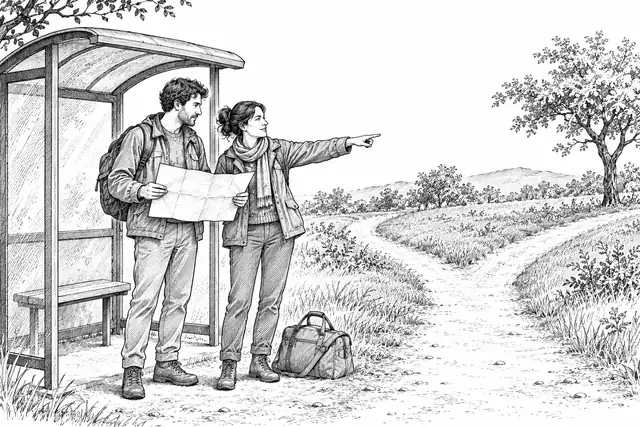
Original imagined example: Someone planning a long trip asks how to find the nearby bus office. A friend teasingly quotes the line. The traveller answers that asking now is part of preparing, and they work out the route together. This response questions the taunt rather than accepting a limit on the traveller.
Cultural context
Ayodhya remains the named destination; no pilgrimage, distance, route, epic episode or restriction on women’s travel is established. The imagined reply is editorial, not part of the saying.