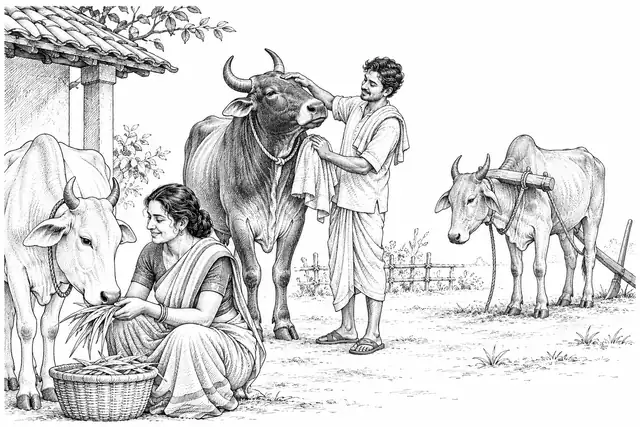
DHAGA 438 · proverbial saying
The poor ox belongs to no one
ଗାଈ ସହଦେବଙ୍କର
ଷଣ୍ଢ ମହାଦେବଙ୍କର
ବଳଦ ବାପୁଡା କହାରି ନୁହେଁ।
ଷଣ୍ଢ ମହାଦେବଙ୍କର
ବଳଦ ବାପୁଡା କହାରି ନୁହେଁ।
ଗାଈ ପାଇଁ ସହଦେବଙ୍କ ନାମ, ଷଣ୍ଢ ପାଇଁ ମହାଦେବଙ୍କ ନାମ ଅଛି; ବଳଦ ବାପୁଡାର କେହି ନାହିଁ। ଆମ ପଢ଼ାରେ ଅନ୍ୟମାନଙ୍କର ଆପଣା ଲୋକ ବା ସାହାରା ଥିବା ବେଳେ ଜଣେ ଏକା ଓ ଅବହେଳିତ ରହିଯିବାର କ୍ଷୋଭ ଓ କରୁଣା ଏଠାରେ ଶୁଣାଯାଏ।
Literal meaning
The cow belongs to Sahadeva; the bull belongs to Mahadeva; the poor ox belongs to no one.
What it means
The first two lines give the cow and bull a named affiliation. The third breaks the pattern: the ox has nobody. Our editorial reading hears sympathy for someone left without support while others have a person to whom they belong. The affectionate pity in “poor ox” gives the ending its emotional weight.
When you might use it
Original imagined example: In a group where most people can turn to a supporter, one member feels overlooked. A reader uses the saying’s final line to describe that feeling of having nobody in their corner.
Cultural context
The repeated possessive endings after Sahadeva and Mahadeva establish an expectation of belonging. The ox’s line replaces a name with “no one.” Cow, bull and ox stay distinct in the translation so that the three-part comparison remains visible.