DHAGA 243 · proverbial saying
A relationship questioned after loss
ଝିଅ ମଲେ ଜୋଇଁ କାହାର ଗୋତ?
ଝିଅର ମୃତ୍ୟୁ ପରେ ଜୋଇଁ ଆଉ କାହାର ସମ୍ପର୍କୀୟ—ପ୍ରଶ୍ନଟି ସମ୍ପର୍କକୁ ଏକମାତ୍ର ସଂଯୋଗ ଉପରେ ନିର୍ଭର କରାଉଛି। ଯେଉଁ ଝିଅ ଦୁଇ ପରିବାରକୁ ଯୋଡ଼ିଥିଲେ, ତାଙ୍କ ଅନୁପସ୍ଥିତିରେ ଜୋଇଁଙ୍କ ସ୍ଥାନ ପ୍ରଶ୍ନରେ ପଡ଼ୁଛି। ଆମ ପଢ଼ାରେ ଏହା ସମ୍ପର୍କର ସଂକୀର୍ଣ୍ଣ ସୀମାକୁ ଭାବିବାର ଅବସର। ଶୋକରେ ଥିବା କୌଣସି ପରିବାର କାହାକୁ ନିଜର ମାନିବେ, ଏହି ପଦ ତାହାର ନିୟମ ନୁହେଁ।
Literal meaning
When the daughter dies, whose relative is the son-in-law?
What it means
The question presents a relationship as if it depends entirely on the woman through whom it was formed. Her death becomes the point at which the son-in-law’s place is questioned. The dictionary explains kinship vocabulary, but supplies no family story or evidence that the question describes a universal custom. Our reading approaches it critically: loss can expose how narrowly people define belonging. It need not settle the answer for a real bereaved family, whose affection and obligations cannot be reduced to this rhetorical line.
When you might use it
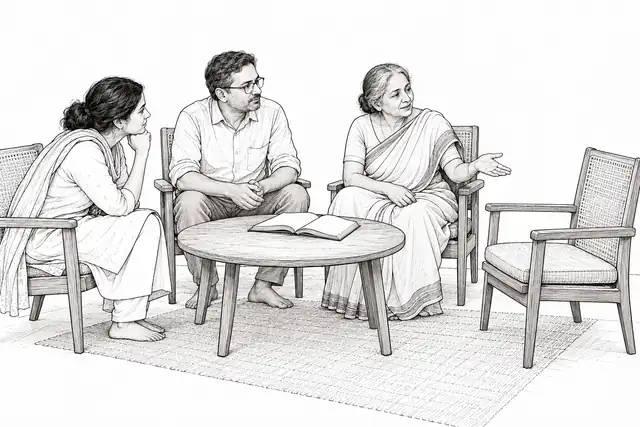
Original imagined example: In a reading group, someone quotes the line while discussing how kinship is defined. Another reader challenges its implied exclusion, pointing out that shared care can outlast the person who first connected a family. This is an invented discussion, not advice delivered to a bereaved person.
Cultural context
Critical interpretation only; no claim about contemporary marriage, inheritance law, a caste custom or every family’s conduct. The source does not establish whether the original use lamented or endorsed exclusion.