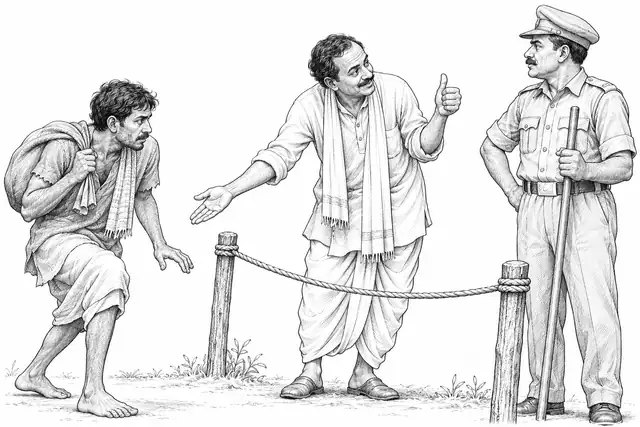
DHAGA 472 · proverbial saying
Telling the thief and the constable
ଚୋରକୁ କହୁଚି ଚୋରି କର
ସିପାହିକୁ କହୁଚି ଜଗିଥା।
ସିପାହିକୁ କହୁଚି ଜଗିଥା।
ଏକ ପଟେ ଚୋରକୁ ଚୋରି କରିବାକୁ କହୁଛି, ଅନ୍ୟ ପଟେ ସିପାହିକୁ ଜଗିବାକୁ କହୁଛି। ଆମ ପଢ଼ାରେ, ଦୁଇ ବିପରୀତ ପକ୍ଷକୁ ବିପରୀତ ପରାମର୍ଶ ଦେଇ ଦୁଇପଟିଆ ଭୂମିକା ନେବାର ଚିତ୍ର ଏହା। ମୂଳ ଛାପାର କାରକୁ ଏଠାରେ ସମ୍ପାଦକୀୟ ଅନୁମାନରେ କର କରାଯାଇଛି।
Literal meaning
Telling the thief, “Steal”; telling the constable, “Keep watch.”
What it means
The same unnamed person encourages the theft and also urges vigilance against it. Our reading sees double-dealing in those incompatible instructions: each side hears support, while the two directions work against one another. The displayed command କର is an explicit editorial repair of printed କାର.
When you might use it
Original imagined example: Someone privately encourages a person to break an agreed rule, then tells the organiser to enforce that very rule. A witness compares the conflicting advice to instructing both thief and constable.
Cultural context
The repeated କହୁଚି keeps the act of advising constant while the recipients and commands change. The thief and the watching constable make the contradiction concrete.