DHAGA 288 · dictionary-labelled saying; source-informed editorial reading
A meal stretched into a taunt
ପୀଢ଼ା ଫାଟେ ନାହି ଲେଉଟେ ତେବେ ସେ ବ୍ରାହ୍ମଣ ଠାଆରୁ ଉଠ
ଏତେ ଖାଇଲେ ଯେ ପୀଢ଼ା ଫାଟିଲା ଓ ନାହି ଓଲଟି ବାହାରିଲା; ତାହା ପରେ ଯାଇ ସେ ବ୍ରାହ୍ମଣ ଆସନରୁ ଉଠିଲେ। ଅତିଶୟ ଭୋଜନକୁ ବଢ଼ାଇଚଢ଼ାଇ ଏହି ଖୋଚା କରାଯାଇଛି। ଏହାକୁ କୌଣସି ଜାତିର ସମସ୍ତ ଲୋକଙ୍କ ଆଚରଣ ବିଷୟରେ ସତ୍ୟ ବୋଲି ଧରିବା ଠିକ୍ ନୁହେଁ।
Literal meaning
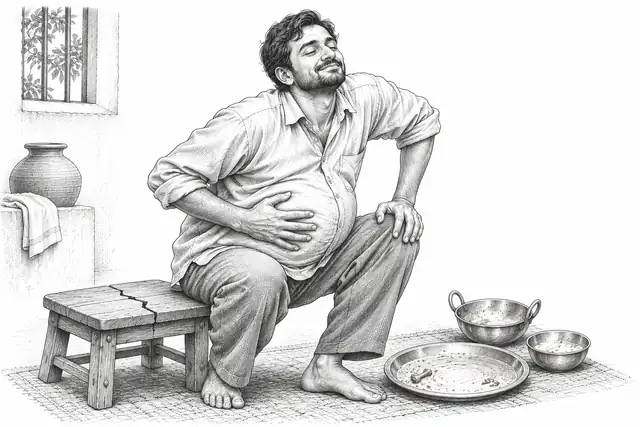
The stool cracks, the navel turns out—only then does that Brahmin rise from his place.
What it means
The meal is exaggerated until the stool cracks and the eater’s navel protrudes; only then does he get up. The bodily excess gives the taunt its force. Its attachment to a named caste is part of the saying’s prejudice, not evidence of how a community behaves.
When you might use it
Original imagined example: ପାଠ ଆଲୋଚନାରେ ଜଣେ ପୀଢ଼ା ଫାଟିବାର ଛବିରେ ହସିଲେ। ଅନ୍ୟଜଣ ପଚାରିଲେ, “ଅତିଶୟତାରେ ହସିବା ଓ ଗୋଟିଏ ଗୋଷ୍ଠୀକୁ ସେପରି ଭାବିବା ଏକା କଥା କି?” / In a reading discussion, someone laughs at the cracking stool. Another asks, “Is laughing at an exaggeration the same as believing it about a whole group?” This critical exchange is invented.
Cultural context
The cracking stool and protruding navel make overeating an extravagant bodily image. The ending describes the eater finally getting up.