DHAGA 426 · proverbial saying
The servant became the mistress
ଖଡ଼ୁ ବିକି କରି ରଖିଲଇ ଦାସୀ
ସେ ହେଲା ସାଆନ୍ତାଣୀ
ମୁଁ ପରବାସୀ।
ସେ ହେଲା ସାଆନ୍ତାଣୀ
ମୁଁ ପରବାସୀ।
ଖଡ଼ୁ ବିକି ଯାହାକୁ ଦାସୀ ଭାବେ ରଖାଗଲା, ସେ ସାଆନ୍ତାଣୀ ହେଲା; ଯିଏ ରଖିଥିଲା, ସେ ପରବାସୀ ହେଲା। ନିଜ ସମ୍ବଳ ଦେଇ ଆଣିଥିବା ସାହାଯ୍ୟ ଶେଷରେ ନିଜ ସ୍ଥାନ ହରାଇବା ସହ ଯୋଡ଼ିଯିବାର ଅଭିଯୋଗ ଭାବେ ଏହାକୁ ପଢ଼ାଯାଇଛି।
Literal meaning
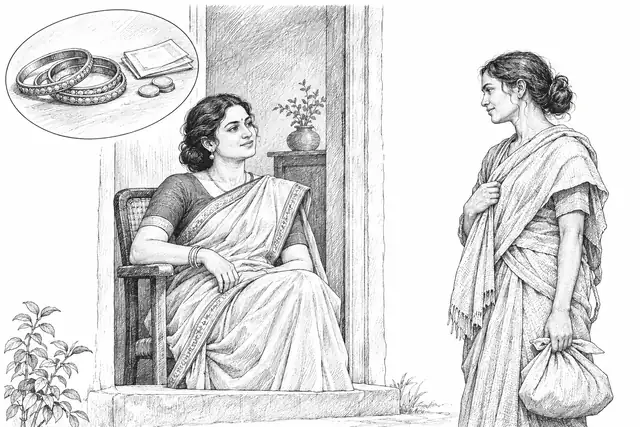
I sold bangles and kept a female servant; she became the mistress of the household, and I a stranger living away from home.
What it means
The speaker begins by paying a personal cost to retain help. By the end, the person brought in as a servant occupies the position of mistress, while the speaker is away from home. This editorial reading hears a complaint about a reversal of power that leaves its original provider displaced.
When you might use it
In a fictional tale, a character gives up valuables to bring someone into the household, then loses their own place there. A reader compares that reversal with these lines. This illustration is newly composed.
Cultural context
The bangles make the initial sacrifice concrete. ଦାସୀ, ସାଆନ୍ତାଣୀ and ପରବାସୀ then trace the change in position through three roles: servant, household mistress and displaced speaker. The verse leaves the means of that reversal untold.