DHAGA 353 · dictionary-labelled saying; source-informed editorial reading
One phrase, food and body
ରୁଖାଶୁଖା) (୧) ଖାଏ ଯେ, ରୁଖାଶୁଖା (୩) ହୁଏ ସେ
ଅଭିଧାନରେ ଏକେ ପଦ ଶୁଖିଲା, ଘିଅ ଓ ତିଅଣବିହୀନ ଖାଦ୍ୟକୁ ଏବଂ ତେଲ ନ ଲାଗିଥିବା ଶୁଖିଲା ଦେହକୁ ବୁଝାଏ। ମଝିର ସଂଖ୍ୟା ଏହି ଅର୍ଥଗୁଡ଼ିକର ଚିହ୍ନ, କହିବା ଧାଡ଼ିର ଶବ୍ଦ ନୁହେଁ। ଖାଦ୍ୟରୁ ଦେହର ଅବସ୍ଥାକୁ ଯୋଡ଼ିବା ଉତ୍ସର କଥା, ଯାଞ୍ଚିତ ଚିକିତ୍ସାତଥ୍ୟ ନୁହେଁ। ଆମ ପାଠ ଶବ୍ଦଖେଳକୁ ଦେଖେ; ଖାଦ୍ୟ ବା ଚେହେରାରେ ମଣିଷର ମୂଲ୍ୟ ମାପେନାହିଁ।
Literal meaning
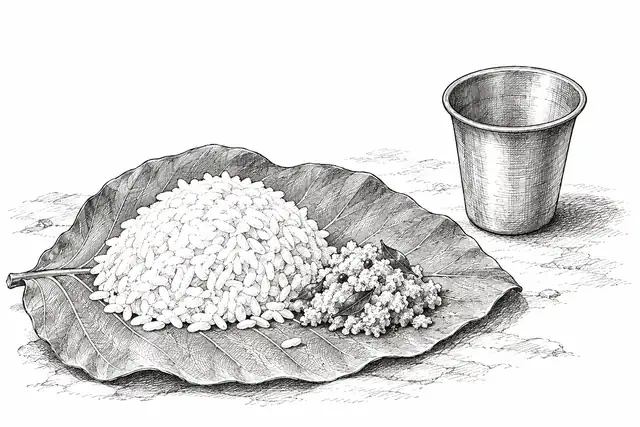
One who eats dry fare becomes dry and rough.
What it means
The dictionary links two senses of the repeated phrase: dry food without ghee or curry, and an unoiled, dry body. Its inserted numbers identify those senses, not spoken words. The saying makes a food-to-body connection; the entry does not verify that connection medically. Our critical reading notices the wordplay without treating someone’s food or appearance as a measure of worth.
When you might use it
Original imagined example: ଧାଡ଼ିଟି ପଢ଼ି ଜଣେ କହିଲେ, ଶବ୍ଦର ମିଳ ଭଲ ଲାଗୁଛି। ଅନ୍ୟଜଣେ ମନେ ପକାଇଲେ, ଏହା କାହାର ସ୍ୱାସ୍ଥ୍ୟ ବିଚାର କରିବାର ଉପାୟ ନୁହେଁ। / Imagined readers distinguish memorable wordplay from assessing another person’s health. This exchange is invented.
Cultural context
Exact digital example retains irregular parentheses and sense indices. No dietary advice, class stereotype, health diagnosis or independent scientific validation is supplied.