DHAGA 473 · proverbial saying
Each mind on its own concern
ଚୋର ମନ ଗଣ୍ଠିରେ
ବାବାଜି ମନ କଣ୍ଠିରେ
ବେପାରୀ ମନ ପାଣ୍ଠିରେ।
ବାବାଜି ମନ କଣ୍ଠିରେ
ବେପାରୀ ମନ ପାଣ୍ଠିରେ।
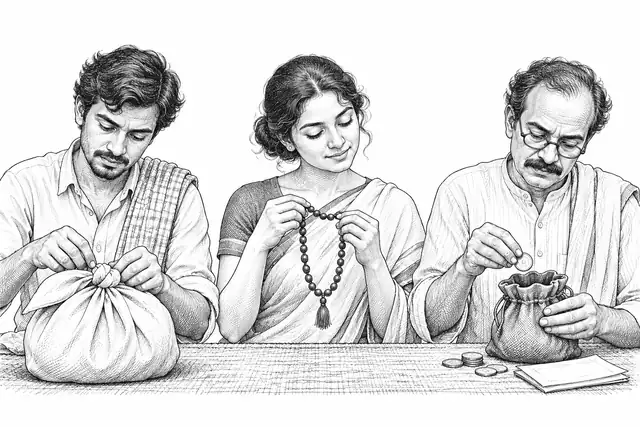
ଚୋରର ମନ ଗଣ୍ଠି ବା ବନ୍ଧା ପୁଟୁଳିରେ, ବାବାଜିଙ୍କ ମନ କଣ୍ଠିମାଳାରେ, ବେପାରୀର ମନ ପାଣ୍ଠିରେ। ଆମ ପଢ଼ାରେ, ଯାହା ସହ ଯାହାର ଆଗ୍ରହ ବା କାମ ଜଡ଼ିତ, ତାହା ଆଡ଼କୁ ତାଙ୍କ ମନ ଯାଉଥିବାର ଚିତ୍ର ଏହା। ତିନି ପ୍ରକାର ଧ୍ୟାନକୁ ତିନିଟି ବସ୍ତୁରେ ଧରାଯାଇଛି।
Literal meaning
The thief’s mind is on the tied bundle; the ascetic’s mind on his neck beads; the trader’s mind on funds.
What it means
Each line gives a person a different object of attention. The tied bundle, devotional beads and funds make those preoccupations tangible. Read editorially, the verse notices how interests and roles shape what occupies the mind; it does not make the three pursuits morally equivalent.
When you might use it
Original imagined example: At the same gathering, one person notices the arrangements, another the accounts and another the music. Someone recalls the verse to comment on their different concerns.
Cultural context
ଗଣ୍ଠି, କଣ୍ଠି and ପାଣ୍ଠି are close in sound but name different objects. Repeating ମନ in each line holds the pattern steady while the focus changes.