DHAGA 507 · proverbial saying
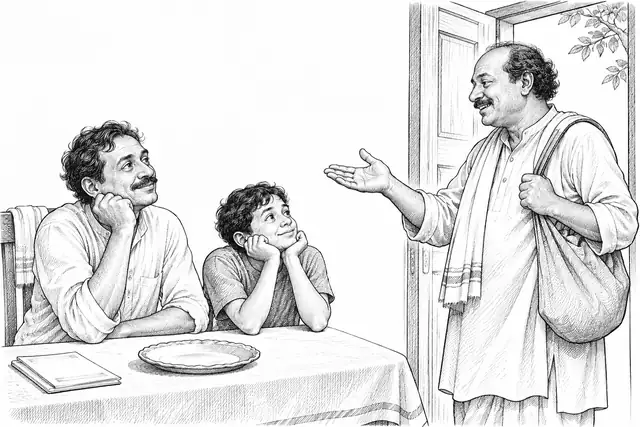
The giver and the long-awaited sweets
ଦିଆ ପୁରୁଷ
ଯାଚି ଯାଉଥିଲା କଟକ ମିଠେଇ
ପୁଅକୁ ହେଲାଣି ବାର ବରଷ।
ଯାଚି ଯାଉଥିଲା କଟକ ମିଠେଇ
ପୁଅକୁ ହେଲାଣି ବାର ବରଷ।
ଦେବାଲୋକ ବୋଲି ପରିଚୟ, କଟକ ମିଠେଇର ଯାଚନା, ଆଉ ପୁଅକୁ ବାର ବରଷ ହୋଇଗଲାଣି—ଏହି ତିନୋଟି କଥା ପାଖାପାଖି ରହିଛି। ଆମ ବ୍ୟାଖ୍ୟାରେ, କଥାରେ ଦେବାକୁ କହି ସମୟ ଗଡ଼ାଇଦେବା ପ୍ରତି ଏହା ବ୍ୟଙ୍ଗ। ପୁଅର ବୟସ ସମୟ ବିତିବାର ଇଙ୍ଗିତ ଦିଏ; ଜନ୍ମବେଳେ ଯାଚିଥିଲା ବୋଲି ମୂଳରେ କୁହାଯାଇନାହିଁ।
Literal meaning
A giving man—he kept offering Cuttack sweets; the son is already twelve years old.
What it means
The opening calls someone a giver, but the concrete act remains an offer of sweets, followed by the observation that the son is already twelve. We read the juxtaposition as irony about an offer that has lingered unfulfilled. The child’s age supplies a sense of time passing; it does not establish when the offer began or whose child is meant.
When you might use it
Original imagined example: Someone repeatedly offers to bring a small gift, but familiar occasions pass without it appearing. A friend recalls the giver who kept offering Cuttack sweets.
Cultural context
Cuttack names the sweets offered, while the boy’s age makes time tangible. The verse supplies no festival, birth celebration or particular confection, and none is needed for its contrast between a generous-sounding offer and delay.