DHAGA 218 · proverbial saying
The king’s answer is a brinjal
ରଣ, ବଣ, ଛଣ, ବାଙ୍କିରଜା ଥାଇ ବୋଇଲେ ମୋ ଢୁଢୁଆ ବାଇଗଣ
ରଣ, ବଣ, ଛଣ—ତିନୋଟି ସମ୍ପଦର ନାଁ ମିଳାଇ କହିବା ପରେ ଉତ୍ତରରେ ଆସୁଛି ମାତ୍ର ବାଇଗଣ। ଅଭିଧାନର ବ୍ୟାଖ୍ୟା ଅନୁସାରେ ଡାମ୍ପଡ଼ାର ନଦୀମାଛ, ଜଙ୍ଗଲଜାତ ଦ୍ରବ୍ୟ ଓ ଛଣର ଆୟଠାରୁ ବାଙ୍କିର ବାଇଗଣ ଫଳୁଥିବା ପଟୁଜମିର ଖଜଣା ଅଧିକ ଥିଲା। ଏହି ଉତ୍ସକଥା ଧରି ପଢ଼ିଲେ, ସାଧାରଣ ଦେଖାଯାଉଥିବା ଫସଲକୁ ନେଇ ଉତ୍ତରରେ ଗର୍ବ ଶୁଣାଯାଏ। ବଡ଼ ତାଲିକାକୁ ଛୋଟ ଦେଖାଯାଉଥିବା ଗୋଟିଏ ଜିନିଷ ଟପିଯିବାରେ କଥାଟିର ଚମକ। ସେହି ରାଜସ୍ୱ ତୁଳନାକୁ ଆମେ ଏଠାରେ ସ୍ୱତନ୍ତ୍ର ଐତିହାସିକ ତଥ୍ୟ ଭାବେ ଯାଞ୍ଚ କରିନାହୁଁ।
Literal meaning
Rana, forest and thatching grass—the king of Banki answers with “my dhudhua brinjal.”
What it means
The opening piles up three resources with a quick rhyme; the reply sets one unassuming vegetable against them. The dictionary explains the joke through a comparison of revenues: it says Dampara’s river fish, forest products and thatching grass brought less than Banki’s tax on the silted land where these brinjals grew. That explanation gives the king’s answer its boastful force: what looks like a modest crop may be the more valuable resource. This is the dictionary’s account, not a revenue comparison independently established here. Its conversational appeal lies in the surprise of the small-looking answer to a grand list.
When you might use it
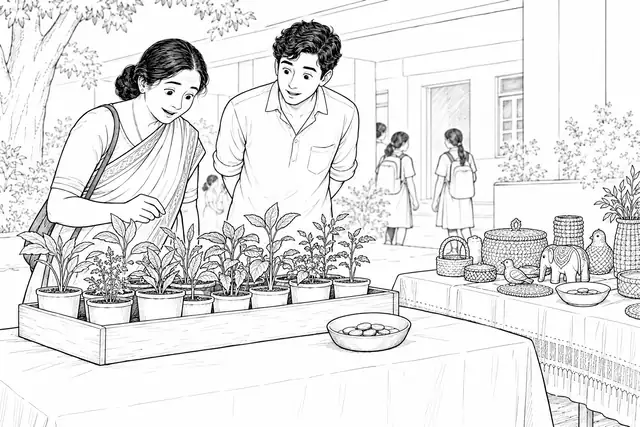
Original imagined example: At a school fundraiser, one group lists its elaborate stalls. Another points out that the plain seedling stall earned the most. A teacher quotes the brinjal line and explains the dictionary’s comparison, using it to tease the assumption that the grandest display must bring the best result.
Cultural context
Banki and Dampara belong to the source’s regional explanation. No reign, date, actual royal conversation, verified revenue figure or origin event is claimed. The modern fundraising application is editorial; the dictionary’s botanical description is not a current taxonomic certification.