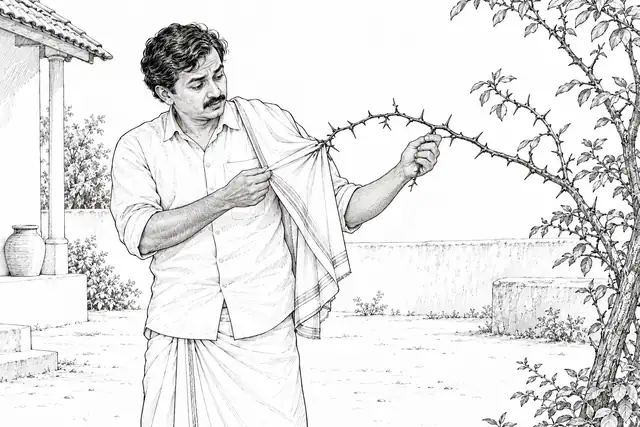
DHAGA 164 · Religious maxim in verse
Ill will turned back on its maker
ଯେ ପାଞ୍ଚେ ପର ର ମନ୍ଦ
ତା ମନ୍ଦ ପାଞ୍ଚନ୍ତି ଗୋବିନ୍ଦ ।
ତା ମନ୍ଦ ପାଞ୍ଚନ୍ତି ଗୋବିନ୍ଦ ।
ଅନ୍ୟର ମନ୍ଦ ଚାହିଁବା ବା ମନ୍ଦ ଯୋଜନା କରିବାରୁ ପଦଟି ବାରଣ କରେ। ସେପରି ଲୋକର ମନ୍ଦ ଗୋବିନ୍ଦ ପାଞ୍ଚନ୍ତି ବୋଲି କହି ଏଥିରେ ଧାର୍ମିକ ଚେତାବନୀ ଦିଆଯାଇଛି। କାହାର ଦୁଃଖ ଦେଖି ସେ ନିଶ୍ଚୟ କିଛି ଖରାପ କରିଥିଲା ବୋଲି ରାୟ ଦେବାର ଆଧାର ଏହା ନୁହେଁ।
Literal meaning
Whoever plans harm for another, Govinda plans harm for that person.
What it means
The verse warns against deliberately wishing or planning another person’s misfortune. It imagines that ill will being answered by Govinda. This is a religious moral warning, not a guarantee that every wrongdoer will suffer or that a person’s suffering proves wrongdoing.
When you might use it
Someone proposes spreading a rumour to damage a rival’s chances, and a friend urges them to abandon the plan. (Original imagined occasion.)
Cultural context
Govinda is retained as the named divine figure in the source. The compilation supplies no separate explanation or attribution. The moral should not be converted into victim-blaming or a prediction of supernatural punishment.