DHAGA 371 · proverbial saying
Affection that lasts only in your presence
ଆଗରେ ଥିଲେ ମୋର ମୋର
ପିଠି କଲେ କିଏ କା’ହାର ?
ପିଠି କଲେ କିଏ କା’ହାର ?
ସାମ୍ନାରେ ଥିଲେ ଆପଣାର ବୋଲି ଦାବି କରିବା, କିନ୍ତୁ ଦୂରେଇଗଲେ ସମ୍ପର୍କକୁ ଭୁଲିଯିବା—ଏହି ଅସ୍ଥାୟୀ ଆପଣାପଣକୁ କଥାଟି ପ୍ରଶ୍ନ କରେ।
Literal meaning
While you are in front of them, it is “mine, mine”; turn your back, and who belongs to whom?
What it means
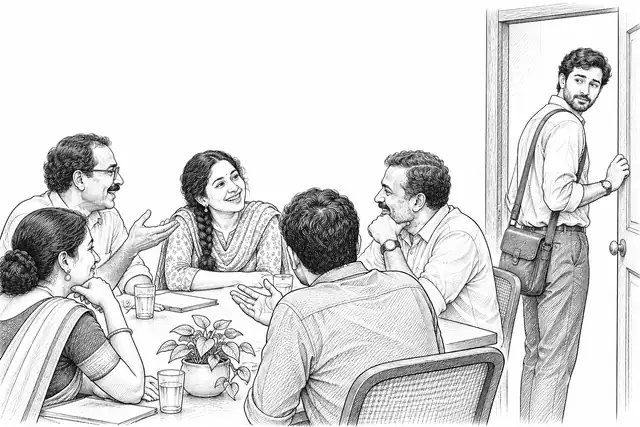
The repeated “mine” sounds warmly possessive while the person is present. Turning away is followed by a question that makes the relationship disappear. This edition reads the contrast as a criticism of affection that is displayed face to face but does not endure in someone’s absence.
When you might use it
Someone is warmly claimed as a close friend during visits, but receives no acknowledgment or concern after leaving. These lines could describe that contrast. This illustration is newly composed.
Cultural context
The verse uses physical orientation—being in front of someone and turning one’s back—to mark presence and absence. Its final question challenges the earlier claim of closeness. It does not identify a particular kinship, event or reason for the change.