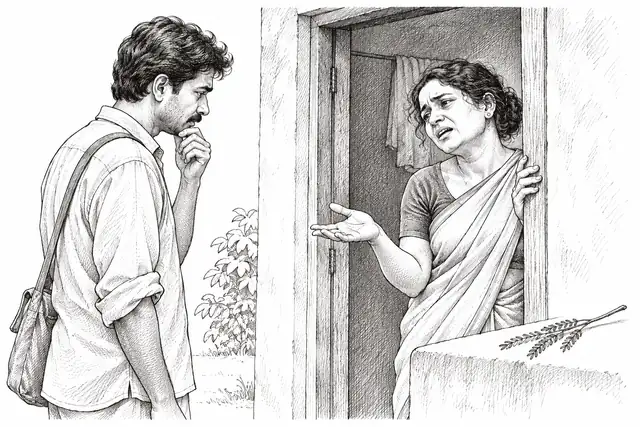
DHAGA 351 · dictionary-labelled saying; source-informed editorial reading
Visits and a painful complaint
ଆସିବୁ ଯିବୁରେ କଳାମାଣିକ! ତୋହରି ପାଇଁ କି ନିତି ଗଞ୍ଜଣା, ପିଠିରେ ତିନ୍ତୁଳି ଛାଟ
ଆସିବାଯିବାର ସମ୍ବୋଧନ ସହ ନିତି ଗଞ୍ଜଣା ଓ ପିଠିରେ ଛାଟର ପ୍ରଶ୍ନ ଅଛି। ଯାହାଙ୍କୁ ଡାକାଯାଉଛି, ତାଙ୍କ ଆସିବାଯିବା କଥା ଅଛି। କିଏ କହୁଛନ୍ତି, ମାଡ଼ ଖାଆନ୍ତି ବା ଦିଅନ୍ତି, ଧାଡ଼ିଟି ସ୍ପଷ୍ଟ କରେନାହିଁ। ଆମ ପାଠରେ ଏକ ସମ୍ପର୍କର କଷ୍ଟକୁ ନେଇ ଅଭିଯୋଗ ଶୁଣାଯାଏ। ଏଥିରୁ ପ୍ରେମକାହାଣୀ ତିଆରି କରୁନାହୁଁ ବା ଦଣ୍ଡକୁ ଯଥାର୍ଥ କହୁନାହୁଁ।
Literal meaning
Come and go, dark jewel! Must there be daily reproach for you, a tamarind switch on the back?
What it means
The address joins coming and going to a question about repeated reproach and a switch on the back. The dictionary defines the switch but does not identify who speaks, visits, receives a blow or inflicts one. Our reading hears a complaint about a connection’s painful cost, while leaving those roles open. It neither reconstructs a romance nor justifies punishment.
When you might use it
Original imagined example: ଆଲୋଚନାରେ ଜଣେ ଧାଡ଼ିଟିକୁ ପ୍ରେମକାହାଣୀ କହିଲେ। ଅନ୍ୟଜଣେ ପଚାରିଲେ, କଥକ ଓ ସମ୍ପର୍କକୁ ଉତ୍ସ କେଉଁଠି ଚିହ୍ନାଇଛି? / An imagined reader questions an unsupported romantic reconstruction. The exchange is invented.
Cultural context
No gender, lover, deity, actual assault or disciplinary custom established. The dictionary’s adjacent physical claims about switches are not adopted as practical guidance.