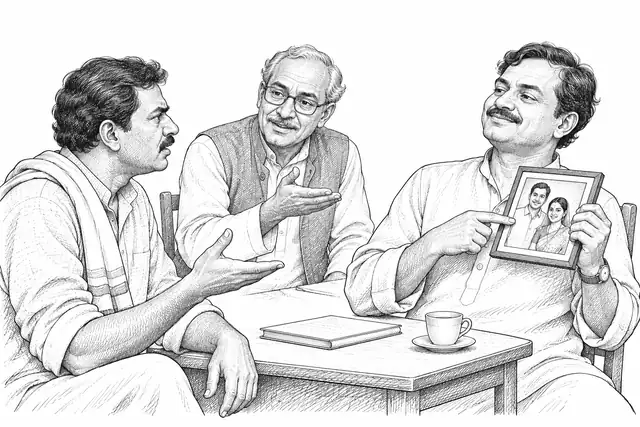
DHAGA 492 · proverbial saying
Your appeal, my son-in-law
ତୁ ଗୁହାରି କରୁଚୁ ଯାହାକୁ
ମୁଁ ଜୁଆଇଁ କରିଚି ତାହାକୁ।
ମୁଁ ଜୁଆଇଁ କରିଚି ତାହାକୁ।
ତୁମେ ଯାହାଙ୍କୁ ଗୁହାରି କରୁଛ, ସେ ମୋର ଜୁଆଇଁ—ଏହା କହି ବକ୍ତା ନିଜର ପାରିବାରିକ ସମ୍ପର୍କ ଦେଖାଉଛନ୍ତି। ଆମ ବ୍ୟାଖ୍ୟାରେ, ଏହା ନିଜ ପ୍ରଭାବର ଦାବି ଏବଂ ଗୁହାରି ଶୁଣୁଥିବା ବ୍ୟକ୍ତିଙ୍କ ନିରପେକ୍ଷତାକୁ ନେଇ ସନ୍ଦେହର ଇଙ୍ଗିତ। ଗୁହାରିର ଫଳ କିନ୍ତୁ ଧାଡ଼ିରେ କୁହାଯାଇନାହିଁ।
Literal meaning
The person you are appealing to—I have made him my son-in-law.
What it means
The reply turns the other person’s hoped-for recourse into a claim of personal influence: the person hearing the appeal is the speaker’s son-in-law. Read editorially, the boast raises a question about impartiality. The saying supplies the relationship and the challenge, while leaving the outcome of the appeal unstated.
When you might use it
Original imagined example: During a disagreement, one person says they will ask a mutual acquaintance to intervene. The other boasts of a close family tie to that acquaintance, echoing this saying.
Cultural context
The paired words ଯାହାକୁ and ତାହାକୁ point to the same person from two directions: someone receiving a plea and someone connected to the speaker by marriage. That shift supplies the force of the reply.