DHAGA 313 · dictionary-labelled saying; source-informed editorial reading
An insult and a plea
ତୁ ମୋତେ ବୋଲୁଛୁ ଶରୁଆ ସଜ, ପରବାସ କରି ନ ଯା
ଅପମାନଜନକ ନାମର ପାଖରେ ଚାଲି ନ ଯିବାର ଅନୁରୋଧ ଆସିଛି। ଉତ୍ସରେ ଧାଡ଼ିଟି ନାରୀଙ୍କ ପାଇଁ ବ୍ୟବହୃତ ଅପମାନସୂଚକ ଅର୍ଥ ପରେ ଅଛି, ପତଳା ଦେହର ଅଲଗା ଅର୍ଥ ପରେ ନୁହେଁ। ଆମ ସମାଲୋଚନାମୂଳକ ପାଠ ଅନୁରୋଧକୁ ଅପମାନ ମାନିନେବାଠାରୁ ଅଲଗା କରେ। ସମ୍ପର୍କ କଣ ବା କାହିଁକି ଯିବାକୁ ମନା କରାଯାଉଛି, ଉତ୍ସ କହେନାହିଁ।
Literal meaning
You call me a loose woman; do not go to live elsewhere.
What it means
The reply places a plea not to leave beside a degrading name. Its position follows the dictionary’s pejorative sense, not its separate slender-body senses. Our critical reading keeps the speaker’s request distinct from accepting the insult. The source does not identify the relationship or explain why the speaker asks the other person not to leave.
When you might use it
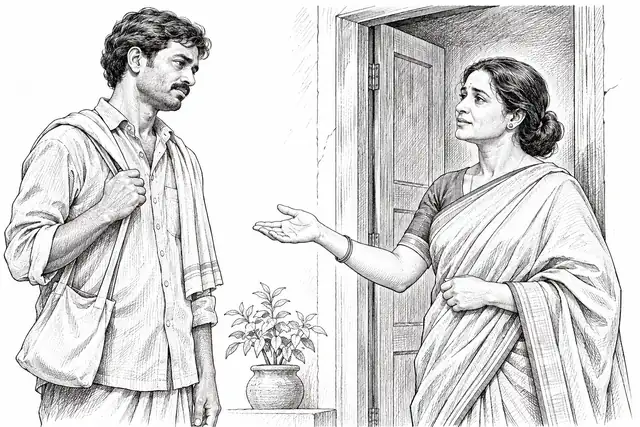
Original imagined example: ପାଠଚକ୍ରରେ ଜଣେ ପଚାରିଲେ, “କାହାକୁ ରହିବାକୁ କହିବାରୁ ତାଙ୍କ ଅପମାନକୁ ସତ ବୋଲି ମାନିବାକୁ ପଡ଼େ କି?” / A reader asks whether wanting someone to stay means accepting their insult. The discussion is invented, not a reconstructed domestic incident.
Cultural context
Sense3 supplies a historically judgmental label. It is retained as attributed language, not an established trait, relationship history or traditional counter-moral.