DHAGA 208 · analogy
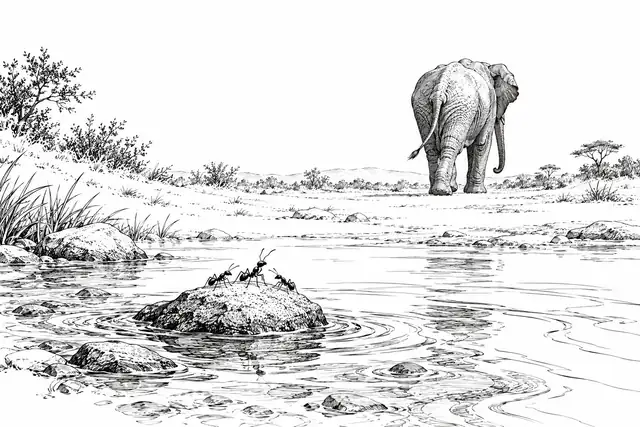
An elephant urinates; ants must swim
ହାତୀ ମୁତି ଦେଲେ ପିମ୍ପୂଡ଼ି ପହଁରାଏ ନ୍ୟାୟ
ହାତୀ ମୁତିଦେବା ପରି ସାଧାରଣ କାମ ପିମ୍ପୂଡ଼ି ପାଇଁ ପହଁରିବାର ପରିସ୍ଥିତି କରିଦିଏ। ବଡ଼ ଓ ସାନର ମାପକୁ ଏହି ଖୋଲା ଦେହଜ ଚିତ୍ର ତୀବ୍ର କରେ। ଅଭିଧାନର ବ୍ୟାଖ୍ୟାରେ ପିମ୍ପୂଡ଼ି ବୁଡ଼ିଯିବା କଥା ଅଛି। ବଡ଼ ପକ୍ଷର ଅଳ୍ପ କାମର ପ୍ରଭାବ ସାନ ପକ୍ଷ ପାଇଁ କେତେ ଭାରି ହୋଇପାରେ—ଏପରି ପ୍ରୟୋଗ ଚିତ୍ରଟିର ସମ୍ପାଦକୀୟ ପାଠ; ଉତ୍ସରେ ଅଲଗା ସାମାଜିକ ପ୍ରୟୋଗ ଦିଆଯାଇନାହିଁ।
Literal meaning
When an elephant urinates, the ants swim.
What it means
The blunt bodily image makes scale impossible to miss: an ordinary discharge for the elephant becomes a flood for the ants. The dictionary’s gloss goes further than the heading’s swimming and says the smaller creatures drown. The contrast can picture how a large actor’s small action overwhelms those with much less room to absorb it; that application is editorial, rather than a separate use supplied by the dictionary.
When you might use it
A large buyer delays payment by a few days, calling it a minor adjustment. A small supplier struggling to pay workers replies with the elephant-and-ant analogy. (Original imagined use, not a collected application.)
Cultural context
Preserve the coarse bodily image and the difference between heading and gloss. This is a recorded analogy, not modern zoological evidence. The business example is newly composed.