DHAGA 318 · dictionary-labelled saying; source-informed editorial reading
A hard division between working and asking
ଯେ ଲାଗିଯାଏ, ସେ ମାଗିଖାଏ ନାହିଁ, ଯେ ମାଗିଖାଏ ସେ ଲାଗିଖାଏ ନାହିଁ
ଧାଡ଼ି ଦୁଇଟି ପରିଶ୍ରମ କରି ଖାଇବା ଓ ମାଗି ଖାଇବାକୁ ସମ୍ପୂର୍ଣ୍ଣ ଅଲଗା କରିଛି। ଶବ୍ଦର ଅର୍ଥରେ ପରିଶ୍ରମ କରି ପେଟ ପୋଷିବା କଥା ଅଛି। ଆମ ସମାଲୋଚନାତ୍ମକ ପାଠ ଏହି କଠୋର ବିଭାଜନକୁ ପ୍ରଶ୍ନ କରେ। କିଏ କାହିଁକି ସାହାଯ୍ୟ ମାଗୁଛି ବା ତାହାର କାମରୁ ଆବଶ୍ୟକତା ମେଣ୍ଟୁଛି କି, ଧାଡ଼ିଟି ତାହା ପ୍ରମାଣ କରେନାହିଁ। ଏହି ପ୍ରତିପ୍ରଶ୍ନ ଆମର, ଅଭିଧାନର ଉପଦେଶ ନୁହେଁ।
Literal meaning
Whoever works does not eat by asking; whoever eats by asking does not earn food through work.
What it means
The paired clauses draw an absolute line between labour and asking for food. The headword supplies earning a livelihood through work. Our critical response questions the absolute division: the saying does not establish why anyone needs help or whether their work meets their needs. That response is editorial, not a counter-moral supplied by the dictionary.
When you might use it
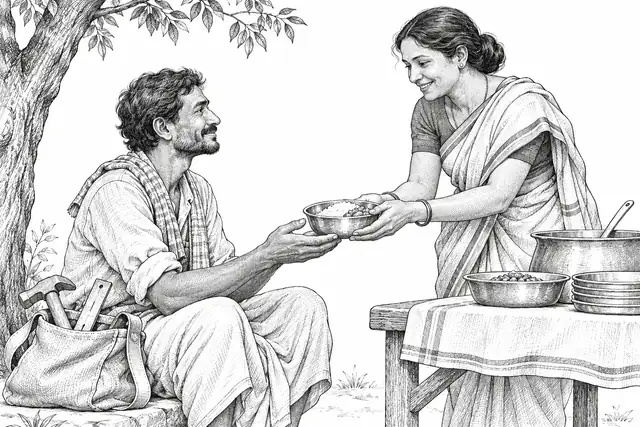
Original imagined example: ପାଠଚକ୍ରରେ ଜଣେ ପଚାରିଲେ, କାମ କରୁଥିବା ଲୋକର ମଧ୍ୟ ସାହାଯ୍ୟ ଦରକାର ହୋଇପାରେ ନାହିଁ କି? / A reader questions the line’s division rather than judging an actual person seeking help. This discussion is invented.
Cultural context
The categorical claim belongs to the quotation, not verified social observation. No community trait, cause of poverty or guarantee of adequate earnings is established.