DHAGA 249 · proverbial saying
The mouth ate, not I
ମୁଁ ଖାଇ ନାହିଁ, ପାଟି ଖାଇଚି ନିୟାମ କରିବା ଆସ
ଖାଇଛି ପାଟି, ମୁଁ ନୁହେଁ—ନିଜ ଅଙ୍ଗକୁ ଅଲଗା କରି ଦାୟ ଏଡ଼ାଇବାର ଅଦ୍ଭୁତ ଯୁକ୍ତି। ତାହା ପରେ ନିୟାମ କରିବାକୁ ଡାକିବାରେ ସେହି ଦୁର୍ବଳ ସଫେଇ ଆହୁରି ହାସ୍ୟକର ହୁଏ। ଆମ ପଢ଼ାରେ, କଥାର କର୍ତ୍ତା ବଦଳାଇଦେଲେ ମଧ୍ୟ କାମଟି ବଦଳେନାହିଁ—ଏହା ସେହି ଫାଙ୍କିକୁ ଧରେ। ଯେଉଁଠି ସଫେଇଟି ନିଜେ ନିଜର ଅସଙ୍ଗତି ଦେଖାଇଦେଉଛି, ସେଠି ଏହି ରସ ଲାଗେ; ସବୁ ଅସ୍ୱୀକାରକୁ ମିଛ ଭାବିବାର କଥା ନୁହେଁ।
Literal meaning
I have not eaten; my mouth has eaten. Come, let us take an oath.
What it means
The speaker tries to separate the mouth from the person who used it. The invitation to swear then gives this flimsy distinction an exaggerated air of certainty. Read as a joke about evasion, the line exposes how changing the subject of a sentence can leave the action unchanged. The dictionary explains taking an oath and records the saying; the account of evasive reasoning is our close reading. Its comic force lies in the transparent excuse, not in proving that every denial is dishonest.
When you might use it
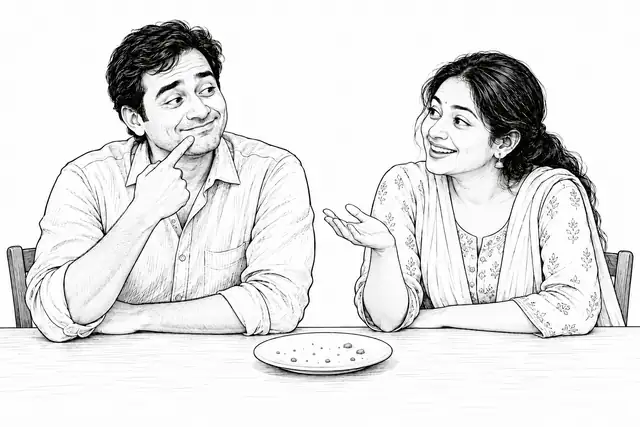
Original imagined example: A friend finishes the last biscuit and jokingly claims that only their mouth ate it. Another answers with the full saying, including the invitation to swear. Both know what happened, so the exchange makes fun of the excuse rather than staging an accusation.
Cultural context
The source labels niyāma karibā a rural verb for swearing an oath. That register label is not evidence of rural dishonesty. No specific oath ritual, legal validity or origin story is supplied.