DHAGA 358 · dictionary-labelled saying; source-informed editorial reading
An invitation against the feeling
ମନରେ ଅଛି କକରଶ, ମିଛେ ବୋଲେ ବନ୍ଧୁ ବସ ବସ
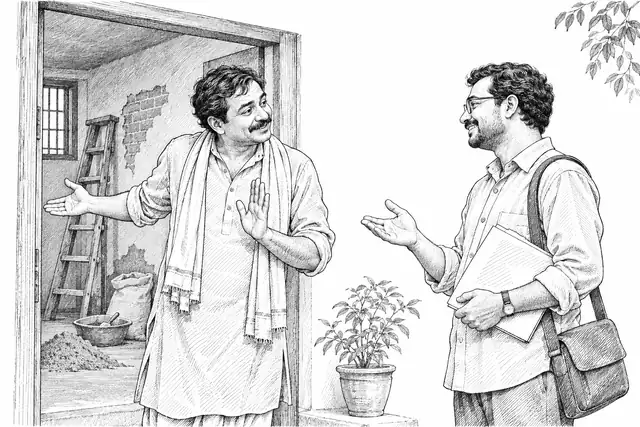
ବନ୍ଧୁଙ୍କୁ ବାରମ୍ବାର ବସିବାକୁ ଡାକୁଛନ୍ତି, ଅଥଚ ମନରେ ଖରାପ ଭାବ ରହିଛି। ସ୍ୱାଗତର କଥା ଓ ମନର ଅନିଚ୍ଛା ମଧ୍ୟରେ ଏହି ତଫାତକୁ ଧାଡ଼ିଟି ଦେଖାଏ। କଥାରେ ଆଦର ଦେଖାଇଲେ ମଧ୍ୟ ତାହା ମନରୁ ଆସୁଛି କି ନାହିଁ, ସେହି ପ୍ରଶ୍ନ ଉଠେ। କୌଣସି ପ୍ରକୃତ ସାକ୍ଷାତରେ ଅନ୍ୟର ମନ କଥା ଜାଣିବାର ପ୍ରମାଣ ଏହା ନୁହେଁ।
Literal meaning
Ill-feeling within, yet falsely saying, “Friend, sit, sit.”
What it means
The invitation is repeated, but the line declares ill-feeling within. Its contrast is between welcoming words and an unwilling welcome. It questions the sincerity of the greeting without giving us a way to know another person’s hidden feelings in an actual encounter.
When you might use it
Original imagined example: ଜଣେ ବ୍ୟସ୍ତ ବନ୍ଧୁ ଅନିଚ୍ଛାରେ ଡାକିବା ବଦଳରେ ଆଉ ଦିନ ଦେଖାହେବାକୁ କହିଲେ। / An imagined friend suggests another day instead of offering an unwilling welcome. This alternative response is invented.
Cultural context
କକରଶ here means ill-feeling. The repeated “sit, sit” makes the spoken welcome emphatic while the opening exposes the contrary feeling.