DHAGA 175 · proverbial saying
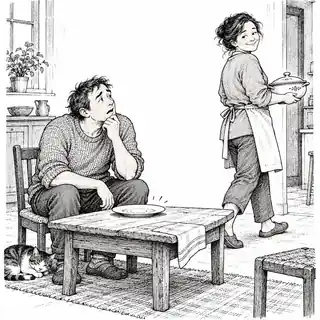
Talking oneself out of a welcome meal
ପୁତୁରା ସାଙ୍ଗରେ କଳି କଲି, ମହୁର ତିଅଣରୁ ମେଞ୍ଚାଏ ପାଆନ୍ତି, ତୁଣ୍ଡ ପରସାଦୁଁ ନାଶ ଗଲି
ପୁତୁରା ସହ କଳି କରିବା ପରେ କଥକ ମନେ ପକାଉଛନ୍ତି, ନକରିଥିଲେ ମହୁର ତିଅଣରୁ ଭଲ ଭାଗଟିଏ ମିଳିଥାନ୍ତା। ଯେଉଁ ତୁଣ୍ଡ ଖାଇବାକୁ ଚାହୁଁଥିଲା, ସେହି ତୁଣ୍ଡର କଥା ହିଁ ଖାଇବାର ସୁଯୋଗ ନଷ୍ଟ କଲା—ଏହି ବିରୋଧରେ ହସ ଅଛି। ଅନାବଶ୍ୟକ କଳି କରି ନିଜ ସୁବିଧା ବା ସମ୍ପର୍କ ବିଗାଡ଼ିଦେବା ପରେ ଏପରି ନିଜକୁ ନେଇ କୁହାଯାଇପାରେ। ତାହା ବୋଲି ଖାଇବା ବା ସୁବିଧା ପାଇଁ ସବୁ ଅନ୍ୟାୟ ସହିବାକୁ କୁହାଯାଉନାହିଁ।
Literal meaning
I quarrelled with my nephew; I might have received a generous portion of mahura curry, but my own mouth spoiled it.
What it means
The speaker looks back on a quarrel and the food they might otherwise have enjoyed. The dictionary defines ମେଞ୍ଚାଏ as a large portion of food. Here the humorous self-accusation turns an abstract consequence of quarrelling into a lost meal: the mouth that wanted food also said the words that cost it. This is a close reading of the example, not a reconstructed family incident.
When you might use it
After needlessly snapping at a friend, someone regrets spoiling the relaxed lunch they had planned together. (Original imagined example, not collected testimony.)
Cultural context
Mahura is retained as a named curry; no ingredients, temple recipe or historical household are inferred. The reading concerns needless quarrelling, not an obligation to remain silent about mistreatment.