DHAGA 388 · proverbial saying
A covered face, a carrying voice
ଓଢଣା ପଡିଛି ନାକ ସରିକି
ତୁଣ୍ଡ ଶୁଭୁଅଛି ଚଉପାଢ଼ୀକି।
ତୁଣ୍ଡ ଶୁଭୁଅଛି ଚଉପାଢ଼ୀକି।
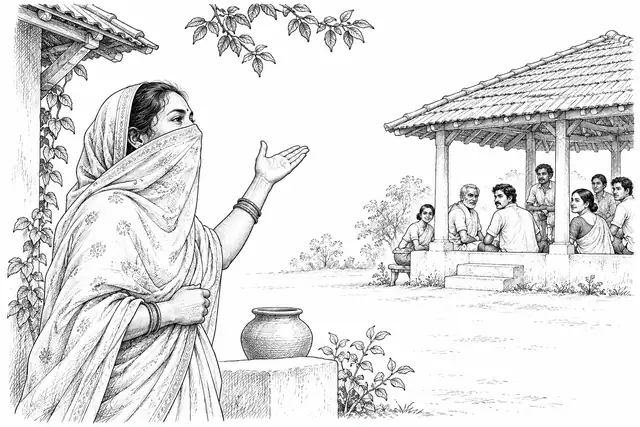
ନାକ ଯାଏ ଓଢଣା ଥିଲେ ମଧ୍ୟ କଥାର ସ୍ୱର ଚଉପାଢ଼ୀ ଯାଏ ଶୁଭୁଛି—ଏହି ବିପରୀତ ଚିତ୍ରରେ ବାହାରର ସଂଯତ ରୂପ ଓ ଉଚ୍ଚ ସ୍ୱରର କଥା ମଧ୍ୟରେ ଅମେଳକୁ ବ୍ୟଙ୍ଗ କରାଯାଇଛି। ଏହା କଥକଙ୍କ ଟିପ୍ପଣୀ; ନାରୀ ଚୁପ୍ ରହିବା ଉଚିତ ବୋଲି ଉପଦେଶ ନୁହେଁ।
Literal meaning
The veil reaches the nose, yet the voice can be heard as far as the meeting pavilion.
What it means
The saying contrasts a face covered to the nose with a voice carrying far beyond it. Its teasing force depends on the speaker treating the covered appearance as reserved, while hearing something much more conspicuous. Our reading identifies that contrast without making quietness a duty for women.
When you might use it
In an imagined reading discussion, someone points out how the covered face and far-carrying voice pull in opposite directions. The group can discuss the speaker’s expectations as well as the image itself. This illustration is newly composed.
Cultural context
ଚଉପାଢ଼ୀ names a meeting pavilion or village school in the inspected dictionary. Here it gives the voice a destination beyond the covered face. A modern fictional use places the saying in a grandmother’s rebuke, showing a gendered judgement in that particular scene.