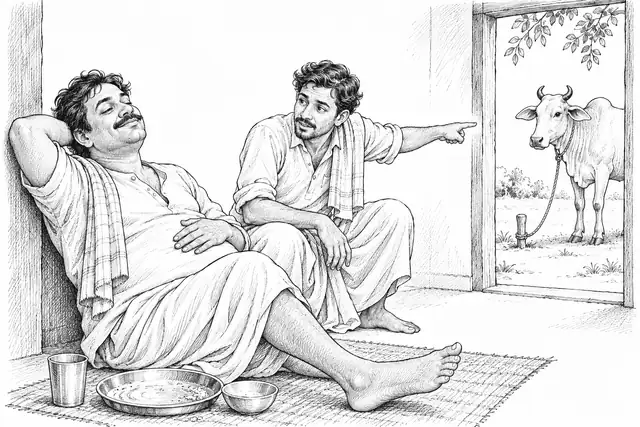
DHAGA 430 · proverbial saying
After eating, why should I go?
ଖାଇ ସାରିଲେ ଗାଈ କି ଯିବି
ଖାଇ ସାରିଲି କାହିଁକି ଯିବି?
ଖାଇ ସାରିଲି କାହିଁକି ଯିବି?
ଖାଇବା ପୂର୍ବରୁ ଗାଈ ପାଖକୁ ଯିବାର କଥା ଦେଉଛି; ଖାଇସାରିଲା ପରେ କାହିଁକି ଯିବି ବୋଲି ଓଲଟା ପଚାରୁଛି। ନିଜ ସ୍ୱାର୍ଥ ପୂରଣ ହୋଇଗଲେ ଆଗର ପ୍ରତିଶ୍ରୁତିରୁ ଓହରିଯିବାକୁ ଉତ୍ସର ବ୍ୟାଖ୍ୟା ଇଙ୍ଗିତ କରେ।
Literal meaning
Once I have eaten, I will go to the cow. I have finished eating—why should I go?
What it means
Before the meal, eating is presented as the condition for going. After the meal, the same speaker questions any need to go at all. The inspected source gloss reads this as withdrawing once one’s own purpose has been served. The small change from “once I have eaten” to “I have eaten” exposes the broken promise.
When you might use it
Original imagined example: Someone promises to help carry supplies after receiving their meal. Once served, they refuse to help. A companion quotes the saying to recall the promise made before eating.
Cultural context
The cow gives the promise a concrete destination. Repeating eating and going in both lines makes the reversal sharp: the meal first delays the undertaking and then becomes the point after which it is abandoned.