DHAGA 331 · dictionary-labelled saying; source-informed editorial reading
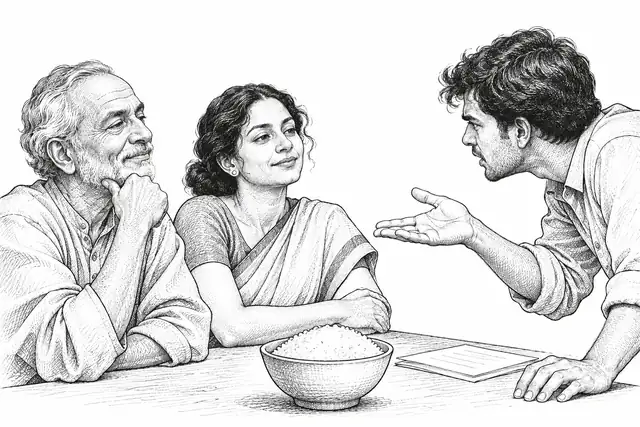
Rice, or age?
ତାକୁ ଭାତ ମକମକଉଛି, ନାଁ ବୟସ ମକମକଉଛି?
ବକ୍ତା ଯାହାକୁ ଧୃଷ୍ଟତା ମନେ କରୁଛନ୍ତି, ତାହାର ଦୁଇଟି କାରଣ ପ୍ରଶ୍ନରେ ରଖୁଛନ୍ତି। ଏହି ଅର୍ଥ ଅଭିଧାନର ତୃତୀୟ ଅର୍ଥରୁ ଆସେ। ଆମ ସମାଲୋଚନାମୂଳକ ପାଠ କୌଣସିଟିକୁ ସତ୍ୟ ମାନିବା ଆଗରୁ ଅଟକେ: ପ୍ରଶ୍ନରେ ବିଚାର ରହିପାରେ, କିନ୍ତୁ କାରଣର ପ୍ରମାଣ ନଥାଇପାରେ। ଭାତ ଖାଇବା ବା ନିର୍ଦ୍ଦିଷ୍ଟ ବୟସ ହେବା କାହାର ଆଚରଣ ନିର୍ଣ୍ଣୟ କରେନାହିଁ।
Literal meaning
Is rice making that person impudent, or is age doing it?
What it means
The question offers two explanations for conduct the speaker regards as impudent. That meaning comes from the dictionary’s third sense. Our critical reading pauses before accepting either explanation: a question can carry a judgment without proving its cause. Neither eating rice nor belonging to an age group establishes how someone behaves.
When you might use it
Original imagined example: ଆଲୋଚନାରେ ଜଣେ ସହକର୍ମୀ କହିଲେ, ବୟସକୁ ଦୋଷ ଦେବା ଆଗରୁ କେଉଁ କଥାରେ ଅସୁବିଧା ହେଲା ସେକଥା ସ୍ପଷ୍ଟ କରିବା। / Colleagues discuss the particular words that caused concern instead of blaming an age group. This exchange is invented.
Cultural context
Sense3 is distinct from intoxication and separation in adjacent senses. No gender, age, nutritional effect or established behavioural cause is supplied; the counterreading is editorial.