DHAGA 322 · dictionary-labelled saying; source-informed editorial reading
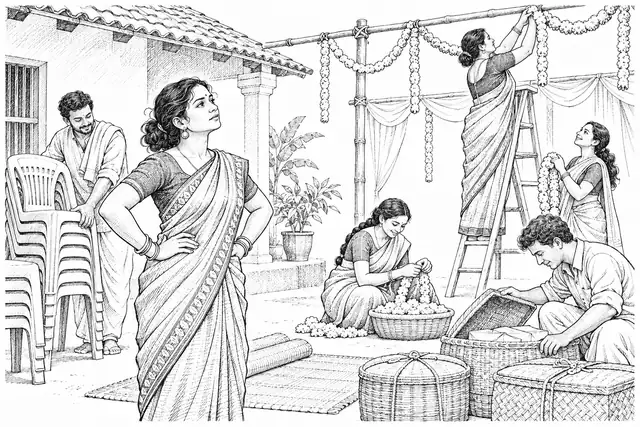
The wedding is tomorrow
ଆଜି ମଙ୍ଗନ କାଲି ବାହା, କିସ କରୁଅଛି କନିଆର ମାଆ
ଧାଡ଼ିଟି ନିକଟେଇ ଆସୁଥିବା ଘଟଣା ପାଖରେ ଏକ ପ୍ରଶ୍ନ ରଖେ—ଆଜି, ତାପରେ କାଲି। ଶବ୍ଦର ଅର୍ଥରେ ମଙ୍ଗନକୁ ବିବାହର ପୂର୍ବଦିନ ସହ ବୁଝାଯାଇଛି। ଆମ ପାଠ ଏହି କ୍ରମରେ ତତ୍ପରତାର ସ୍ୱର ଶୁଣେ, କିନ୍ତୁ ମାଆ ପ୍ରକୃତରେ କଣ କରୁଛନ୍ତି ତାହା ଅଜଣା ରହେ। ସେ କର୍ତ୍ତବ୍ୟରେ ଅବହେଳା କରିଛନ୍ତି ବା ସବୁ ପ୍ରସ୍ତୁତି କେବଳ ତାଙ୍କର କାମ, ଏହାର ପ୍ରମାଣ ଧାଡ଼ିରେ ନାହିଁ।
Literal meaning
Today is mangana, tomorrow the wedding; what is the bride’s mother doing?
What it means
The line puts a question beside an approaching event: today, then tomorrow. The headword explains mangana through the eve of a marriage. Our reading hears urgency in that sequence, while leaving the mother’s actual activity unknown. Nothing here establishes that she has neglected a duty or that preparation belongs to her alone.
When you might use it
Original imagined example: କାଲି ପାଠସଭା ଅଛି। ଆୟୋଜକମାନେ ଜଣକୁ ଦୋଷ ନ ଦେଇ ବାକି କାମ ଭାଗ କରିନେଲେ। / Organizers divide the remaining work before tomorrow’s reading event. This is an invented application, not a wedding account.
Cultural context
Dictionary marriage-eve senses supply context, not evidence of a universal present-day custom, prescribed ritual or maternal obligation. Tone beyond the question remains an editorial reading.