DHAGA 270 · dictionary-labelled saying; source-informed editorial reading
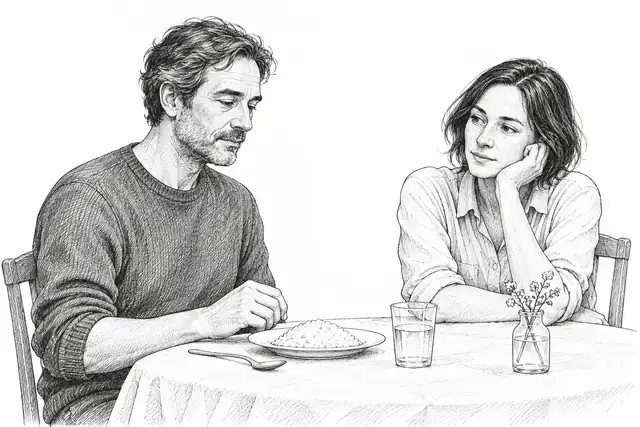
My meal, your troubled face
ମୁ ଖାଉଥାଏଁ ମୋହୋର ଭାତ; ତୋହୋର କିଆଁ ଗାଲରେ ହାତ!
କଥକ ନିଜ ଭାତ ଖାଇବା ସାମ୍ନାରେ ଅନ୍ୟଜଣଙ୍କ ଦୁଃଖୀ ଭଙ୍ଗୀ ରଖନ୍ତି। ଅଭିଧାନ ଗାଲରେ ହାତ ଦେବାକୁ ଦୁଃଖର ଭଙ୍ଗୀ ବୋଲି ବୁଝାଏ। ଆମ ପଢ଼ାରେ ପ୍ରଶ୍ନଟି ତୀକ୍ଷ୍ଣ—ମୋର ସାଧାରଣ କାମ ତୁମକୁ କାହିଁକି ବ୍ୟଥିତ କରୁଛି? ଏଥିରେ ଟାହି ବା ନିଜକୁ ସମର୍ଥନ କରିବାର ସ୍ୱର ଥାଇପାରେ। କିନ୍ତୁ ଈର୍ଷା ସ୍ଥିର ହୁଏନାହିଁ, ଦେଖୁଥିବା ଲୋକର ଚିନ୍ତାର କାରଣ ମଧ୍ୟ ଅକୁହା। ସେହି ଅକୁହା କାରଣରେ କଥାର ଧାର ରହେ।
Literal meaning
I am eating my own rice; why is your hand on your cheek?
What it means
The speaker sets their own meal against someone else’s troubled pose. The dictionary explains that pose through distress. Our reading hears a pointed question about another person’s reaction: why should my ordinary act trouble you? It may sound teasing or defensive, but the line does not establish envy or explain the observer’s concern. That unanswered reason gives the exchange its edge.
When you might use it
Original imagined example: At lunch, one friend eats while another rests a cheek in a hand. The eater playfully quotes the line. The friend replies that they are thinking about an unfinished letter. This invented reply shows why a troubled expression need not be envy.
Cultural context
The source explains a gesture of affliction, not a universal body-language rule. No actual speaker, household incident or motive is documented.