DHAGA 530 · proverbial saying
The mouth’s taste and the belly
ପାଟି ସୁଆଦ
ପେଟ କି ଜାଣଇ ତହିଁରେ ଭେଦ?
ପେଟ କି ଜାଣଇ ତହିଁରେ ଭେଦ?
ସୁଆଦ ପାଟିର କଥା; ପେଟ ସେଥିରେ ଭେଦ ଜାଣେ କି ବୋଲି ଢଗଟି ପଚାରେ। ଆମ ସମ୍ପାଦକୀୟ ପାଠରେ ଏହା ସୁଆଦର ପସନ୍ଦ ଓ ଖାଇ ପେଟ ପୂରାଇବାର ଦରକାରକୁ ଅଲଗା କରି ଦେଖାଏ। ଏହା ଖାଦ୍ୟର ପୋଷକଗୁଣ ବା ଶରୀର ବିଷୟରେ ବୈଜ୍ଞାନିକ ନିୟମ ନୁହେଁ। ମୂଳ ଲେଖାରେ ତହିଁରେ ଶବ୍ଦର ଅତିରିକ୍ତ ଇକାର ଚିହ୍ନଗୁଡ଼ିକୁ ଏଠାରେ ସଜାଡ଼ାଯାଇଛି।
Literal meaning
Taste is for the mouth; does the belly know the difference?
What it means
The mouth values flavour, while the question imagines the belly as unconcerned with that distinction. Our editorial reading separates the pleasure of a particular taste from the simpler need to be fed. It is a rhetorical contrast, not a claim that different foods have identical effects.
When you might use it
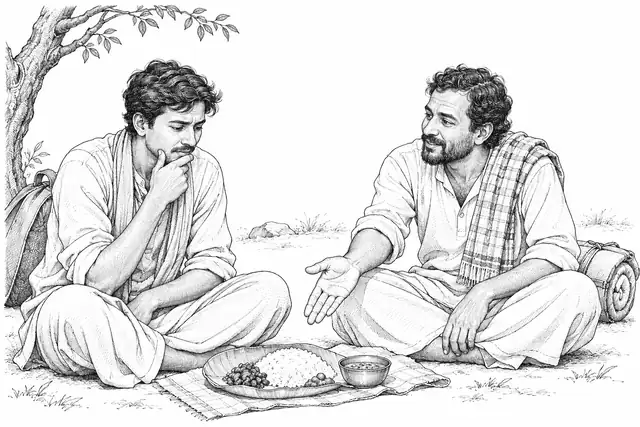
Original imagined example: During a journey, someone rejects an adequate simple meal because it is not their favourite flavour. A companion recalls the mouth-and-belly contrast to distinguish preference from the immediate need for food.
Cultural context
Two parts of one body become different voices in the argument: the mouth stands for taste, and the belly for being fed. The short first line names the preference; the question then challenges how far that preference matters.