DHAGA 339 · dictionary-labelled saying; source-informed editorial reading
Coming and going alone
ଆସିଛୁ ଏକା, ଯିବୁ ଏକା, ସାଙ୍ଗରେ ନ ଯିବେ ପିଲା ପିଚିକା
ପୁଣିପୁଣି ଆସୁଥିବା ଏକାପଣ ପାଖରେ ଶେଷ ଖଣ୍ଡ ପରିବାରକୁ ରଖେ। ଅଭିଧାନରେ ପିଲାମାନଙ୍କ ସହ ପରିବାରସ୍ଥ ବ୍ୟକ୍ତି ଅର୍ଥ ଅଛି। ଆମ ପାଠ ଏଠି ମୃତ୍ୟୁ ଓ ସାଙ୍ଗରେ ରହିପାରିବାର ସୀମା ନେଇ ଭାବନା ଶୁଣେ। ଏହା ଆମ ବ୍ୟାଖ୍ୟା; ପରିବାରର ସ୍ନେହ ମୂଲ୍ୟହୀନ ବୋଲି ନୁହେଁ। ପ୍ରିୟଜନଙ୍କୁ ଛାଡ଼ି ରହିବା ବା ମୃତ୍ୟୁ ପରେ କଣ ହୁଏ ସେବିଷୟରେ ନିଶ୍ଚିତ ମତ ମଧ୍ୟ ନୁହେଁ।
Literal meaning
You came alone and will go alone; the family will not go with you.
What it means
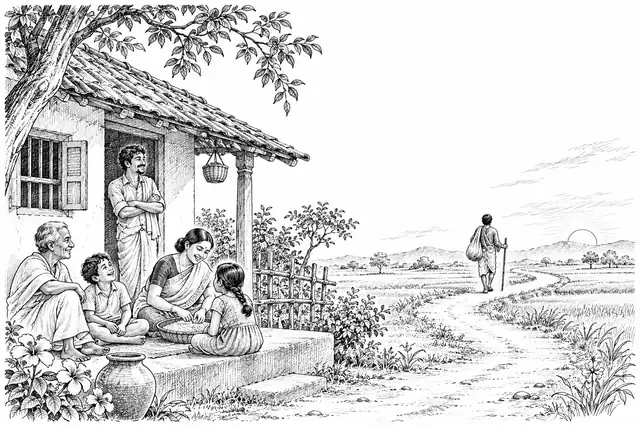
The repeated solitude stands against the family named in the final phrase. The dictionary gives family members, including children, as the relevant sense. Our reading hears a reflection on mortality and the limits of accompaniment. That interpretation does not make family affection worthless, require withdrawal from loved ones, or prove a doctrine about what follows death.
When you might use it
Original imagined example: ଧାଡ଼ିଟି ପଢ଼ି ଜଣେ ପ୍ରିୟଜନଙ୍କ ସହ ସମୟ କାଟିବାକୁ ଠିକ୍ କଲେ। / A reader responds by making time for loved ones. This response is invented, not a traditional use claim.
Cultural context
Arrival and departure are the quoted images; mortality is our interpretive frame. The later Fakirmohan example illustrates another sense and does not identify the saying’s author.