DHAGA 482 · proverbial saying
Honour held above life
ଜାନ୍ ଯାଉ, ମହତ ଥାଉ
ମହତ ଗଲେ ନମିଳେ ଆଉ।
ମହତ ଗଲେ ନମିଳେ ଆଉ।
ଜୀବନ ଯାଉ ପଛେ ମହତ ରହୁ, କାରଣ ମହତ ଥରେ ଗଲେ ଆଉ ମିଳେନାହିଁ—ଢଗଟି ଏତେ ଦୃଢ଼ ଭାବରେ ସମ୍ମାନର ମୂଲ୍ୟ କହୁଛି। ନିଜ ଆଚରଣରେ ସତ୍ୟନିଷ୍ଠା ଓ ଭଲ ନାଁ ରଖିବାର ଗୁରୁତ୍ୱ ଏଥିରୁ ବୁଝିହୁଏ। ଜୀବନକୁ ବିପଦରେ ପକାଇବା ଏହି ବ୍ୟାଖ୍ୟାର ପରାମର୍ଶ ନୁହେଁ; ମହତ ଆଉ ଫେରେନାହିଁ କହିବାଟି ଢଗର ଚରମ ଜୋର।
Literal meaning
Let life go; let honour remain. Once honour is gone, it cannot be regained.
What it means
The speaker gives honour a value greater even than life, then reinforces the claim by calling its loss irreversible. That is the verse’s absolute rhetoric. An editorial application is to protect integrity rather than exchange it for an advantage; preserving the wording does not make harm to oneself or anyone else a duty.
When you might use it
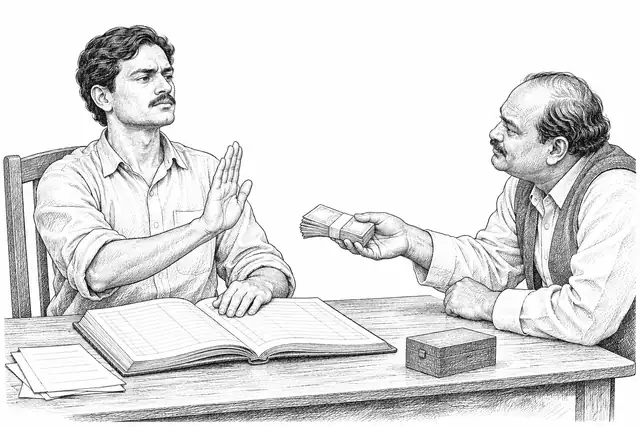
Original imagined example: Someone refuses to falsify a record for a profitable deal, saying that a good name matters more than the immediate gain. The example applies the concern for integrity without the verse’s literal life-or-death stakes.
Cultural context
The first line sets two wishes against each other: ଯାଉ and ଥାଉ, let one go and let the other remain. Repeating ମହତ in the next line makes the claimed permanence of its loss the reason for that stark preference.