DHAGA 39 · proverbial saying
A difficulty caused by one’s own act
ଆପଣା ହସ୍ତେ ଜିହ୍ଵା ଛେଦି, କେ ଅଛି ତାର ପ୍ରତିବାଦୀ
ନିଜ କାମରୁ ନିଜର ଅସୁବିଧା ହେଲେ ଅନ୍ୟକୁ ଦୋଷ ଦେବା ସହଜ ନୁହେଁ—ଏହି ଭାବ କଥାଟିରେ ଅଛି। ତୀବ୍ର ଶାରୀରିକ ଚିତ୍ରଟି ନିଜ କାମର ଦାୟିତ୍ୱକୁ ଜୋର୍ ଦିଏ। କିନ୍ତୁ ସବୁ କଷ୍ଟ ନିଜ ଭୁଲରୁ ଆସେନାହିଁ, ଆଉ ଭୁଲ୍ କରିଥିଲେ ବି ସାହାଯ୍ୟର ଆବଶ୍ୟକତା ଶେଷ ହୁଏନାହିଁ।
Literal meaning
Having cut your tongue with your own hand, who is there to speak against it?
What it means
The sharp image points to trouble brought about by one’s own action. It challenges an attempt to shift responsibility elsewhere. It should not be used to assume that every hardship is self-caused or that someone who made a mistake no longer deserves help.
When you might use it
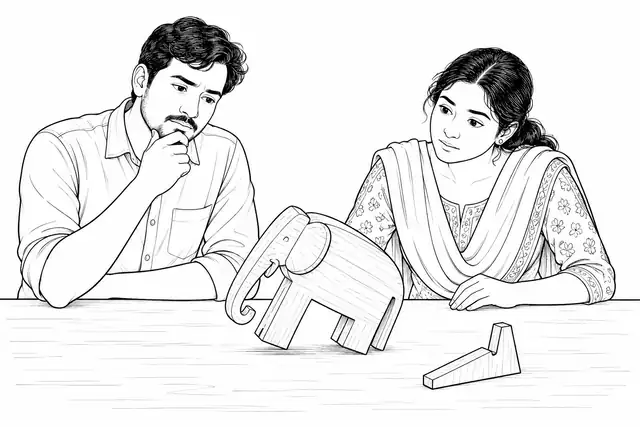
A team ignores its own backup plan, then finds that a preventable delay has stopped the work. (New editorial example, not a collected quotation.)
Cultural context
The bodily injury is a rhetorical image, not an instruction. The final question is rendered as a challenge to protest; it is not evidence for a historical incident.