DHAGA 343 · dictionary-labelled saying; source-informed editorial reading
Naming the rain amid the flood
ଘରବୁଡ଼ି ପାଣି ଆଣ୍ଠୁଏ ହେଲାଣି, କଣା ବୋଲେ ମେଘ ଦୁଲୁକୁଛି
ଘର ବୁଡ଼ି ପାଣି ଆଣ୍ଠୁଏ; ବକ୍ତା ବର୍ଷାର କଥା କହୁଛନ୍ତି। ଅଭିଧାନରେ ଦୁଲୁକିବା ଅର୍ଥ ପ୍ରବଳ ବର୍ଷା, ଅଳ୍ପ ବର୍ଷା ନୁହେଁ। ଆମ ପାଠ ପଚାରେ: ପ୍ରଭାବକୁ ଦେଖି କାମ କରିବା ଦରକାର ବେଳେ ଘଟଣାର ନାମ କହିବା ଯଥେଷ୍ଟ କି? ଉତ୍ସର ଦୃଷ୍ଟିସମ୍ବନ୍ଧୀୟ ତାଚ୍ଛଲ୍ୟକୁ ଆମେ ବିଚାରଶକ୍ତିର ବ୍ୟାଖ୍ୟା ଭାବେ ଗ୍ରହଣ କରୁନାହୁଁ। ଏପରି ପ୍ରତିକ୍ରିୟାର କାରଣ ଦୃଷ୍ଟିବାଧା ବୋଲି ଧାଡ଼ିଟି ପ୍ରମାଣ କରେନାହିଁ।
Literal meaning
The house is flooded, the water knee-deep; the one-eyed person says it is raining in torrents.
What it means
The house and knee-deep water show a consequence; the speaker names the rain. The dictionary explicitly glosses torrential rain, not a light shower. Our reading asks whether naming an event is enough when its effects need attention. We reject using the quoted disability label to explain anyone’s judgment: the line supplies no evidence that impaired sight causes such a response.
When you might use it
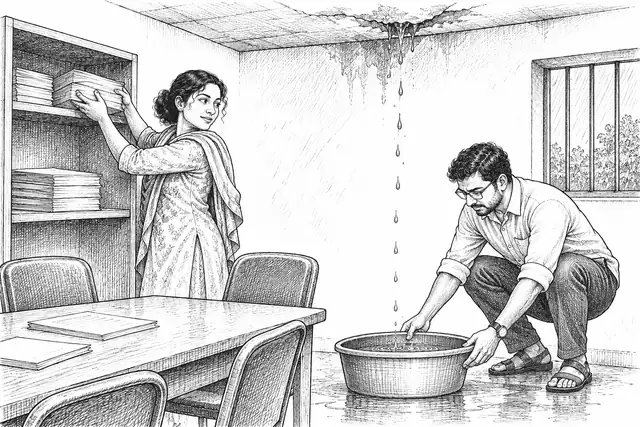
Original imagined example: ଛାତରୁ ପାଣି ଝରୁଥିଲା। କେବଳ ବର୍ଷାର କଥା ନ କହି ଦଳଟି ଭିଜୁଥିବା କାଗଜକୁ ଶୁଖିଲା ସ୍ଥାନକୁ ନେଲା। / A group moves papers away from a leak instead of merely describing the rain. This response is invented.
Cultural context
The critical response is editorial, not a supplied traditional counter-moral. No actual flood, medical assessment or disability-group trait is documented; other senses concern vibration and fear.