DHAGA 225 · proverbial saying
Counting every piece, spending twice
ଖଣ୍ଡ଼ିଗଣିଆଁର ଦିଗୁଣ ସରେ
ରାନ୍ଧୁଣିଙ୍କୁ ଦେବା ଆଗରୁ ଖାଦ୍ୟର ପ୍ରତି ଖଣ୍ଡ ଗଣୁଥିବା କୃପଣଙ୍କୁ ଅଭିଧାନ “ଖଣ୍ଡ଼ିଗଣିଆଁ” କହିଛି। ଏତେ ହିସାବ ରଖି ମଧ୍ୟ ତାଙ୍କର ଦୁଇଗୁଣ ସରେ—ଏହି ଓଲଟା ଫଳରେ କଥାର ମଜା। କେମିତି ଦୁଇଗୁଣ ଖର୍ଚ୍ଚ ହେଲା, ଉତ୍ସ କୌଣସି ଘଟଣା ଦେଇନାହିଁ; ସଂଖ୍ୟାଟି କଟାକ୍ଷକୁ ଜୋର ଦିଏ। ଅଳ୍ପ ବଞ୍ଚାଇବାର ଜିଦ୍ରେ ଏମିତି ଅସୁବିଧା ତିଆରି ହୋଇପାରେ, ଯାହା ପାଇଁ ପରେ ଅଧିକ ଦେବାକୁ ପଡ଼େ। ଅଭାବରେ ସାବଧାନ ହୋଇ ଚଳିବାକୁ ନୁହେଁ, ଏଠାରେ ଅତି କୃପଣ ନିୟନ୍ତ୍ରଣକୁ ହସରେ ଧରାଯାଇଛି।
Literal meaning
The piece-counter uses up twice as much.
What it means
The dictionary’s piece-counter is someone so miserly with food that each cut piece is counted before it is handed to the cook. The saying answers that anxious control with a reversal: the supposed saver ends up using twice as much. “Twice” gives the rebuke its bite; the source supplies no measured account or explanation of how the loss occurs. One editorial application is to a petty economy whose inconvenience creates more expense. The target is grasping control, not careful budgeting when resources are genuinely limited.
When you might use it
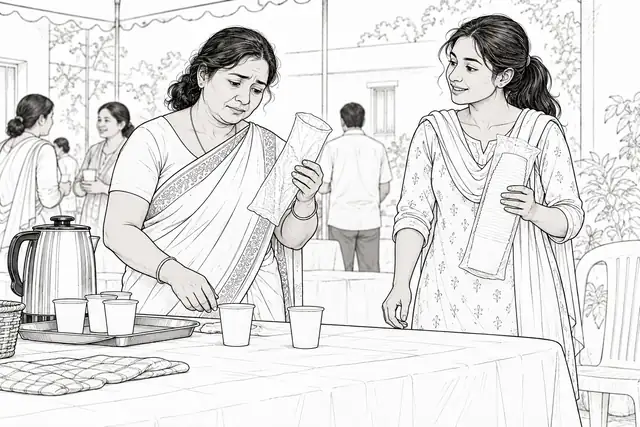
Original imagined example: For a shared event, an organiser insists on buying too few paper cups to save a little. When they run out, a volunteer makes a second trip and pays more for a small packet. Someone quotes the saying about the piece-counter. The cups and extra trip are an invented illustration, not the dictionary’s story.
Cultural context
The source explicitly defines food-related miserliness. The broader petty-economy application is editorial. No quantitative spending law, nutritional instruction or judgement of people living in poverty is implied.