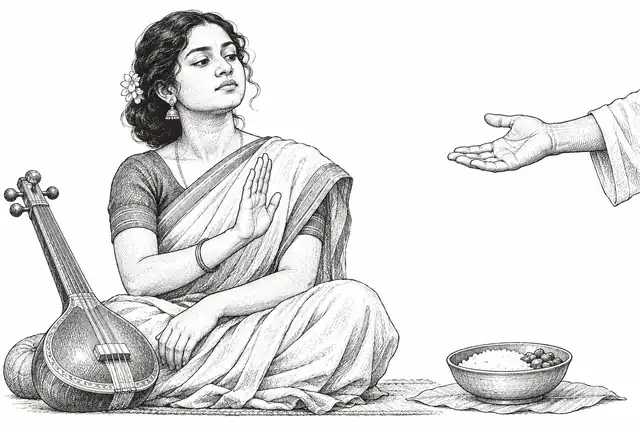
DHAGA 436 · proverbial saying
Refusing when called upon
ଗାଆଣକୁ ଗାଆ କହିଲେ ଗାଏ ନାହିଁ
ଡାହାଣୀକୁ ଖାଆ କହିଲେ ଖାଏ ନାହିଁ
ଡାହାଣୀକୁ ଖାଆ କହିଲେ ଖାଏ ନାହିଁ
ଗାଇବାକୁ କହିଲେ ଗାଆଣ ଗାଏ ନାହିଁ, ଖାଇବାକୁ କହିଲେ କଥାର ଡାହାଣୀ ଖାଏ ନାହିଁ। ଉତ୍ସ ଏହି ଅମଙ୍ଗକୁ ନିଜ ଗୁମର ପଦାରେ ପଡ଼ିଯିବାର ଭୟ ସହ ଯୋଡ଼େ। କିଛି ଲୁଚାଇ ରଖିବା ପାଇଁ ସମ୍ମୁଖରେ କାମଟି କରିବାକୁ ନଚାହିଁବାର ଛବି ଏଠାରେ ଅଛି।
Literal meaning
Tell the singer to sing, and the singer does not sing; tell the witch to eat, and she does not eat.
What it means
Each figure refuses the very action named in the request. The inspected gloss attributes that reluctance to fear of exposing a secret. The parallel turns an apparently simple invitation into a moment of guardedness; it leaves the secret itself unspecified.
When you might use it
Original imagined example: In a literary discussion, readers ask why both figures refuse. One points to the source gloss about concealment, while another observes that the verse never tells us what the singer is hiding.
Cultural context
The repeated pattern of command and refusal binds the lines together, and the close sounds of ଗାଆ and ଖାଆ sharpen the pairing. The witch belongs to the verse’s imagined comparison. Its discussion of concealment can be read without applying that label to a real person.