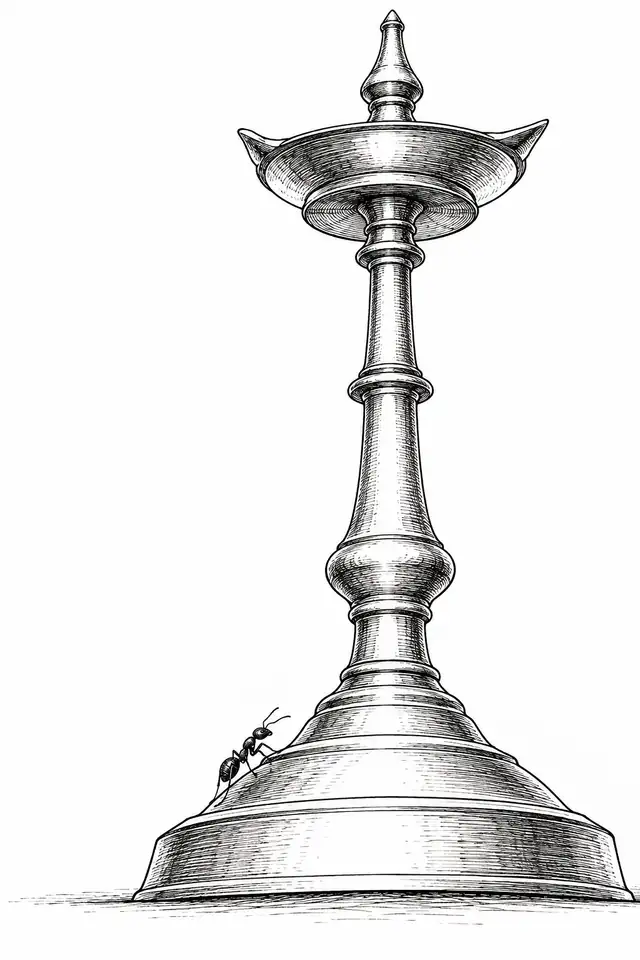
DHAGA 206 · traditional analogy
An ant climbing the lampstand
ପିମ୍ପୂଡ଼ି ହୋଇ ଦୀପରୁଖାରେ ଚଢ଼ିବା
ଛୋଟ ପିମ୍ପୁଡ଼ି ଓ ଉଚ୍ଚ ଦୀପରୁଖାର ଛବିକୁ ଅଭିଧାନ ‘ଛୋଟ ଲୋକ’ ହୋଇ ‘ବଡ଼ କଥା’ରେ ହସ୍ତକ୍ଷେପ କରିବା ସହ ଯୋଡ଼ିଛି। ଏହା କେବଳ ଆକାରର ତୁଳନା ନୁହେଁ; କାହାକୁ ତୁଚ୍ଛ କରି ତାଙ୍କ କଥା କହିବାର ଅଧିକାରକୁ ଅସ୍ୱୀକାର କରିବାର ସ୍ୱର ମଧ୍ୟ ଏଥିରେ ଅଛି। ସେହି ଉଚ୍ଚନୀଚ ବିଚାର ଉତ୍ସର ପ୍ରୟୋଗର ଅଂଶ, କାହାର ମୂଲ୍ୟ ବା ସାମର୍ଥ୍ୟର ପ୍ରମାଣ ନୁହେଁ। ପ୍ରଶ୍ନ କରି ପଢ଼ିଲେ ଦେଖାଯାଏ, ଉତ୍ତର ଦେବା ବଦଳରେ ଏକ ଚିତ୍ର କିପରି ଲୋକଟିକୁ ଆଲୋଚନାରୁ ବାହାରେ ରଖିପାରେ।
Literal meaning
Being an ant and climbing onto the lampstand.
What it means
The dictionary applies this small creature and high perch to a “small” person intervening in “big” matters. The wording does more than describe scale: it can dismiss someone’s right to take part by placing them below the subject under discussion. That ranking belongs to the source’s social judgment, not a fact about anyone’s worth or ability. Read critically, the analogy lets us hear how a vivid image can keep a person out of a conversation instead of answering what they said.
When you might use it
At a residents’ meeting, a newcomer questions an expense. Someone dismisses the question with “ପିମ୍ପୂଡ଼ି ହୋଇ ଦୀପରୁଖାରେ ଚଢ଼ିବା.” Another resident replies that the question should be answered, whoever asked it. (Original imagined example, not collected testimony.)
Cultural context
An unnumbered analogy follows note3 and precedes5 in both witnesses; labelled fourth position for this audit only. Source’s ଛୋଟ ଲୋକ is not evidence of a named caste, innate inferiority or lack of ability. Critical reading preserves the dismissive register, not an endorsed lesson to stay in one’s place.