DHAGA 309 · dictionary-labelled saying; source-informed editorial reading
A household’s changing circumstances
କେତେବେଳେ ଜୋଡ଼ା ମାଇପରେ ଘର କେତେବେଳେ ଚୂଲୀ ଫୁଙ୍କି ଫୁଙ୍କି ମର
ବାରମ୍ବାର ଆସୁଥିବା “କେତେବେଳେ” ଘରର ଚିତ୍ରକୁ ରାନ୍ଧି ରାନ୍ଧି ହାଲିଆ ହେବାର ଅଭିଯୋଗ ସହ ଯୋଡ଼େ। ଏହି ବଦଳର କାରଣ ଉତ୍ସ କହେନାହିଁ। ଆମ ସମାଲୋଚନାମୂଳକ ପାଠରେ ଏଠି ନାରୀଙ୍କ ରୋଷେଇ ଶ୍ରମ ଉପରେ ଆଶା ରଖାଯାଇଛି; ସେହି ଆଶାକୁ ବୁଝିବା ଅର୍ଥ ରୋଷେଇ କେବଳ ତାଙ୍କ ଦାୟିତ୍ୱ ବୋଲି ମାନିବା ନୁହେଁ।
Literal meaning
At times, a home with two wives; at times, blow and blow at the hearth until you die.
What it means
The repeated “at times” turns a household image into an exhausting cooking complaint. The source gives no cause for the change. Our critical reading notices that the contrast relies on an expectation of women’s kitchen labour; describing that expectation does not make cooking their obligation.
When you might use it
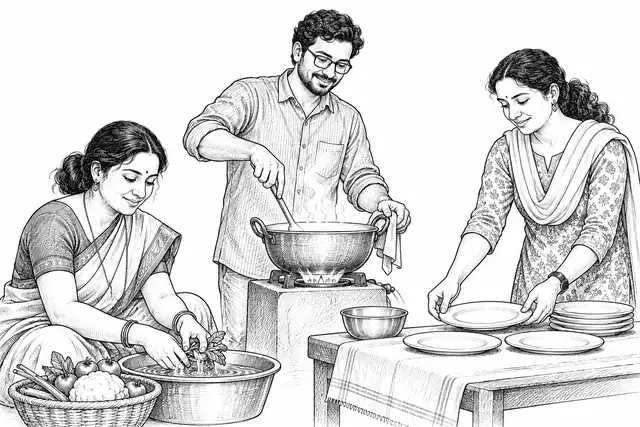
Original imagined example: ପାଠଚକ୍ରରେ ଧାଡ଼ିଟି ପଢ଼ି ସମସ୍ତେ ରୋଷେଇ କାମ କିଏ କରେ ବୋଲି ଆଲୋଚନା କଲେ। ନିଜ ସଭାର ଭୋଜନ ପାଇଁ ସେମାନେ କାମ ବାଣ୍ଟିନେଲେ। / Readers discuss the complaint and share the work of preparing their meeting’s meal. This response is invented, not the saying’s traditional moral.
Cultural context
The quotation follows the figurative cooking sense. Its death wording is rhetorical here, not an established death event; no marriage history or reason for absence is supplied.