
DHAGA 376 · proverbial saying
An elephant on credit
ଉଧାର ମିଳିଲେ କିଣନ୍ତି ହାତୀ
ଶୁଝିଲେ ଶୁଝିବ ପୁଅର ନାତି।
ଶୁଝିଲେ ଶୁଝିବ ପୁଅର ନାତି।
ଉଧାର ମିଳୁଛି ବୋଲି ବଡ଼ କିଣାକିଣି କରିବା, ଆଉ ଶୁଝିବାର ଭାରକୁ ଦୂର ଭବିଷ୍ୟତର ବଂଶଧରଙ୍କ ଉପରେ ଛାଡ଼ିଦେବା—ଏହି ବେପରୁଆ ମନୋଭାବକୁ କଥାଟି ବ୍ୟଙ୍ଗ କରେ।
Literal meaning
When credit is available, they buy an elephant; if it is repaid, the son’s grandson will repay it.
What it means
An elephant makes the purchase extravagantly large; the son’s grandson pushes repayment far into the future. Together they expose the borrower’s indifference to the burden created by easy credit. This edition reads the verse as a satire on enjoying a purchase now while leaving its cost to others later.
When you might use it
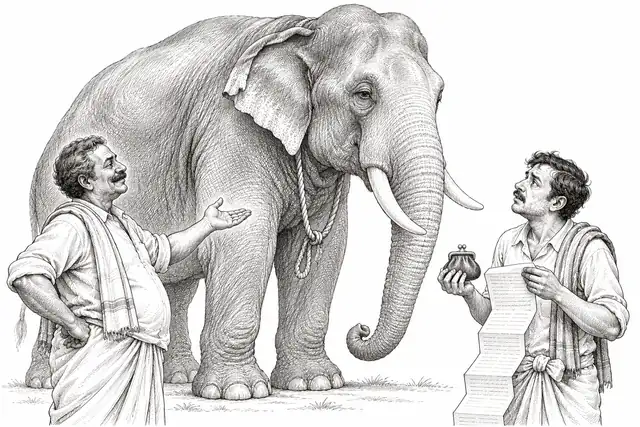
Someone proposes an extravagant purchase on borrowed money and dismisses repayment as a problem for future family members. Another person might recall the elephant in this saying. This illustration is newly composed.
Cultural context
The image joins scale and distance: a large animal bought immediately, followed by a descendant several generations away who is expected to pay. The conditional ଶୁଝିଲେ adds to the careless tone—repayment itself sounds uncertain.
Recorded variants
ବାପ ଖାଇଛନ୍ତି ତାଳ
ପୁଅଙ୍କ ପାଇଁ ତା କାଳ।Literal reading: Father has eaten palmyra fruit; for the sons, that is doom. Odia meaning: ତାଳ ଖାଇଛନ୍ତି ବାପ, କିନ୍ତୁ ତାହା ପୁଅଙ୍କ ପାଇଁ କାଳ ହୋଇଛି—ଏହା ପଙ୍କ୍ତିର ବିପରୀତ ଚିତ୍ର। ଆମ ସମ୍ପାଦକୀୟ ପାଠରେ, ଜଣଙ୍କ କାମର କୁପରିଣାମ ପର ପିଢ଼ିକୁ ଭୋଗିବାକୁ ପଡ଼ିବାର କଥା ଏଠାରେ ଆସେ। ତାଳ ଖାଇବାରୁ କାହିଁକି ଏପରି ହେଲା, ପଙ୍କ୍ତି ତାହା କହୁନାହିଁ। Interpretive reading: The person who eats and the people who face doom are different generations. Read editorially, the couplet pictures consequences passing from a parent’s action to the children. Its compressed contrast leaves the connection unexplained; it does not establish that the sons share responsibility for the father’s action. The fruit-to-doom connection is unexplained; no debt or intentional evasion inferred.