DHAGA 536 · proverbial saying
Food for the belly, blows for the back
ପେଟକୁ ଦେଇ
ପିଠିକି ମାଇଲେ ସୁହାଉ ଥାଇ।
ପିଠିକି ମାଇଲେ ସୁହାଉ ଥାଇ।
ପେଟକୁ ଖାଇବା ଦେଇ ପିଠିରେ ମାଡ଼ ମାରିଲେ ମଧ୍ୟ ତାହା ସୁହାଏ ବୋଲି ପଙ୍କ୍ତିର ବକ୍ତା କହୁଛନ୍ତି। ଆମ ସମ୍ପାଦକୀୟ ପାଠରେ ଖାଦ୍ୟ ବା ଜୀବିକା ପାଇଁ ନିର୍ଭରତା ଭିତରେ ଅପମାନ ଓ କଷ୍ଟ ସହିବାର ଇଙ୍ଗିତ ଅଛି। ଖାଇବା ଦେବା ଦ୍ୱାରା କାହାକୁ ମାଡ଼ ମାରିବାର ଅଧିକାର ମିଳେ—ଏପରି ମତକୁ ଏହି ବ୍ୟାଖ୍ୟା ସମର୍ଥନ କରୁନାହିଁ।
Literal meaning
Having given to the belly, if one strikes the back, it remains agreeable.
What it means
The saying places nourishment and a blow in the same exchange. Its speaker claims that feeding makes even the blow acceptable. Read critically, the image can expose how dependence for sustenance makes harsh treatment something a person endures. That is an editorial interpretation of the contrast, not a justification for the treatment.
When you might use it
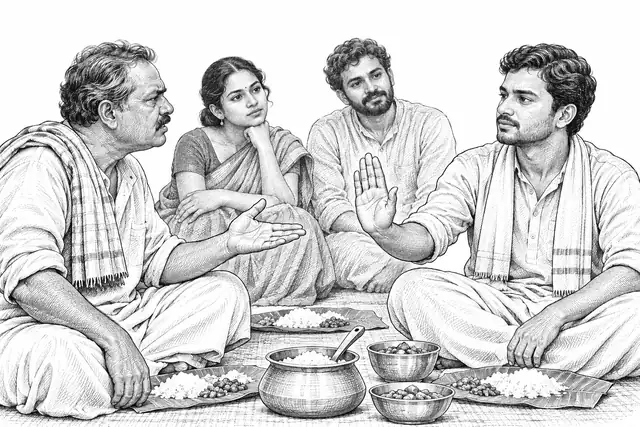
Original imagined example: In a discussion of dependence, someone quotes the belly-and-back saying. Another participant points out that providing food cannot excuse humiliating or hurting the person who needs it.
Cultural context
Belly and back give the exchange two bodily locations: the belly receives sustenance, the back receives the blow. The source leaves both people unnamed, allowing the contrast to be discussed without assigning it to a particular household or occupation.