DHAGA 335 · dictionary-labelled saying; source-informed editorial reading
Borrowed clothes and a nod
ପର ଲୁଗା ପିନ୍ଧି ଯାତକୁ ଯାଏ ଲୋକ ପଚାରିଲେ ମୁଣ୍ଡ ଟୁଙ୍ଗାରୁ ଥାଏ
ଅନ୍ୟର ଲୁଗା ପିନ୍ଧିବା ପାଖରେ ଧାଡ଼ିଟି ମୁଣ୍ଡ ଟୁଙ୍ଗାରିବାକୁ ରଖେ। ଆମ ପାଠ ବାହାରକୁ ଦିଶୁଥିବା କଥା ଓ ଅକୁହା ଉତ୍ତର ମଧ୍ୟର ଫାଙ୍କ ଦେଖେ। ଲୋକେ କଣ ପଚାରିଲେ, ମୁଣ୍ଡ ଟୁଙ୍ଗାରିବାର ଅର୍ଥ କଣ, ବା ଠକିବା ଉଦ୍ଦେଶ୍ୟ ଥିଲା କି ନାହିଁ—କୁହାଯାଇନାହିଁ। ଅନ୍ୟର ଲୁଗା ନେବା ନିଜେ ଅସାଧୁତାର ପ୍ରମାଣ ନୁହେଁ।
Literal meaning
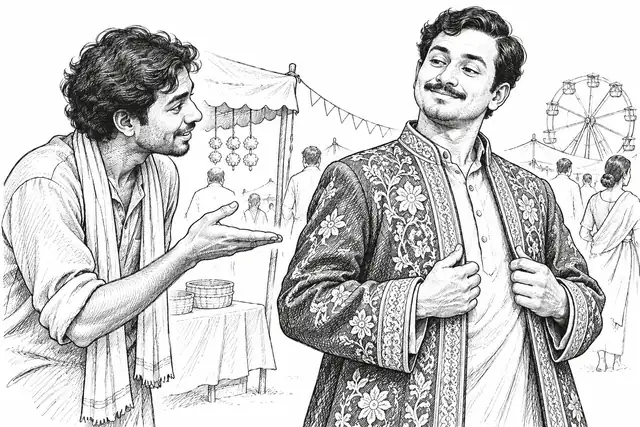
Wearing another’s clothes, someone goes to the fair; when people ask, the person keeps nodding.
What it means
The line places another person’s clothing beside a nodding response. Our reading notices a gap between visible appearance and an answer left unspoken. It does not tell us what people ask, what the nod means, or whether the wearer intends to deceive. Receiving or borrowing clothing is not itself evidence of dishonesty.
When you might use it
Original imagined example: ନାଟକ ପାଇଁ ଲୁଗା ନେଇଥିବା ଜଣେ ଦର୍ଶକଙ୍କୁ କହିଲେ କିଏ ଦେଇଥିଲେ। ସହାୟତାର କଥା କହିବାରେ ତାଙ୍କର ଲଜ୍ଜା ନଥିଲା। / A performer acknowledges borrowed clothing openly. This response is invented.
Cultural context
The borrowed clothes are visible, but the response is only a nod. The line leaves the question and the wearer’s intention unstated.