DHAGA 526 · proverbial saying
One ornament, two turns
ନାକ ଚଣା ବୋଲି ଖଣ୍ଡେ
ତାକୁ ବୋହୂ ନାଉଥାଏ ଦଣ୍ଡେ
ତାକୁ ଶାଶୁ ନାଉଥାଏ ଦଣ୍ଡେ।
ତାକୁ ବୋହୂ ନାଉଥାଏ ଦଣ୍ଡେ
ତାକୁ ଶାଶୁ ନାଉଥାଏ ଦଣ୍ଡେ।
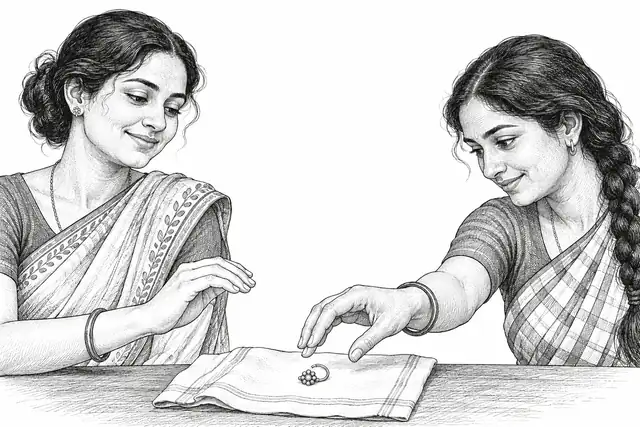
ନାକଚଣା ଖଣ୍ଡିଏ ଅଛି; ତାକୁ ବୋହୂ କିଛି ସମୟ ପିନ୍ଧୁଛନ୍ତି, ପୁଣି ଶାଶୁ କିଛି ସମୟ ପିନ୍ଧୁଛନ୍ତି। ଆମ ସମ୍ପାଦକୀୟ ପାଠରେ ଏହା ଅଳ୍ପ ସାମଗ୍ରୀକୁ ଏକାଧିକ ଲୋକ ପାଳି କରି ବ୍ୟବହାର କରିବାର ଚିତ୍ର। ଦୁହିଁଙ୍କ ମଧ୍ୟରେ ଝଗଡ଼ା କିମ୍ବା କୌଣସି ନିର୍ଦ୍ଦିଷ୍ଟ ପ୍ରଥା ଏଥିରେ କୁହାଯାଇନାହିଁ।
Literal meaning
Just one nose ornament: the daughter-in-law wears it for a while, and the mother-in-law wears it for a while.
What it means
The repeated lines pass the same ornament from one wearer to the other. Our editorial reading focuses on limited means: two people’s wishes are accommodated through turns with a single object. The verse leaves their feelings about the arrangement unstated.
When you might use it
Original imagined example: Two colleagues have only one piece of equipment between them and arrange alternating turns. Someone recalls the single ornament worn first by one household member and then by the other.
Cultural context
The household relationship gives the repeated action two distinct participants, while ଖଣ୍ଡେ keeps the available ornament singular. Repeating ଦଣ୍ଡେ makes the alternation audible. The scene can be understood without treating it as a documented household practice.