DHAGA 321 · dictionary-labelled saying; source-informed editorial reading
Was the remark meant for you?
ତୁ ତ ନୋହୁ, ତୁ କାହିଁ ପାଇଁ ଦିହକୁ ନଉ
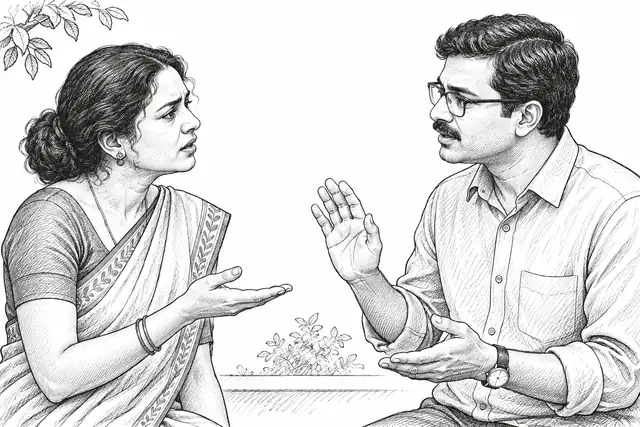
ବକ୍ତା କହୁଛନ୍ତି, କଥାଟି ଶ୍ରୋତାଙ୍କୁ ଲକ୍ଷ କରି କୁହାଯାଇନାହିଁ; ତେବେ ସେ କାହିଁକି ମନକୁ ନେଉଛନ୍ତି? ଅଭିଧାନରେ ଏହା ବ୍ୟକ୍ତିଗତ ଭାବେ ନେବା ଅର୍ଥ ତଳେ ଅଛି, ଦାୟିତ୍ୱ ନେବା ଅର୍ଥରେ ନୁହେଁ। ଆମ ପାଠ କଥାର ଲକ୍ଷ୍ୟ ଓ ତାହାର ପ୍ରଭାବର ଫରକକୁ ପଚାରେ। ବକ୍ତା ଅସ୍ୱୀକାର କଲେ ବୋଲି ଶ୍ରୋତାଙ୍କ ମନଦୁଃଖ ଅକାରଣ ହୋଇଯାଏନାହିଁ।
Literal meaning
You are not the one; why are you taking it personally?
What it means
The speaker denies that the listener is the target, then questions the listener’s hurt. The dictionary places the line under taking something personally, not accepting responsibility. Our reading asks how the intended target and the felt effect may differ. The speaker’s denial does not prove that the listener has no reason to be hurt.
When you might use it
Original imagined example: ସଭାରେ ଏକ ମନ୍ତବ୍ୟ ଶୁଣି ଜଣେ ସଦସ୍ୟ ଅସ୍ୱସ୍ତି ଜଣାଇଲେ। ବକ୍ତା କେବଳ ଅସ୍ୱୀକାର ନ କରି ନିଜ କଥା ସ୍ପଷ୍ଟ କଲେ। / A speaker clarifies a remark after a listener expresses discomfort. This peaceful continuation is invented.
Cultural context
No particular offense, relationship or justified dismissal is established. The speaker’s claim is quoted rhetoric, not an independently verified account.