DHAGA 323 · dictionary-labelled saying; source-informed editorial reading
Wisdom and curry received from others
ଶିଖାଇଦେଲା ବୁଦ୍ଧି, ମାଗି— ଆଣିଲା ତିଅଣ
ଖଣ୍ଡବାକ୍ୟଟି ଅନ୍ୟଠାରୁ ଶିଖିଥିବା ବୁଦ୍ଧି ପାଖରେ ମାଗି ଆଣିଥିବା ତିଅଣକୁ ରଖେ। ଶବ୍ଦର ଅର୍ଥରେ ଅନ୍ୟର ଉପଦେଶରୁ ମିଳିଥିବା ବୁଦ୍ଧି ବୁଝାଯାଏ। ଆମ ପାଠ ଦୁଇଟିରେ ଅନ୍ୟଜଣଙ୍କ ଅବଦାନ ଉପରେ ନିର୍ଭରତାକୁ ଦେଖେ। କେତେଦିନ ରହିବ, କାମରେ ଆସିବ କି ସନ୍ତୋଷ ଦେବ, ଧାଡ଼ିଟି ତାହାର ଉତ୍ତର ଦେଇନାହିଁ। ଅନ୍ୟଠାରୁ ଶିଖିବା ବିରୋଧରେ ନିଷ୍ପତ୍ତି ଯୋଡ଼ିବା ଦରକାର ନାହିଁ।
Literal meaning
Wisdom taught by someone else; curry asked for and brought.
What it means
The fragment places received counsel beside received food. The headword explains a plan or understanding gained through another person’s teaching. Our reading follows that shared dependence on another’s contribution. The quotation supplies no ending about whether either will last, work or satisfy; it need not become a verdict against learning from others.
When you might use it
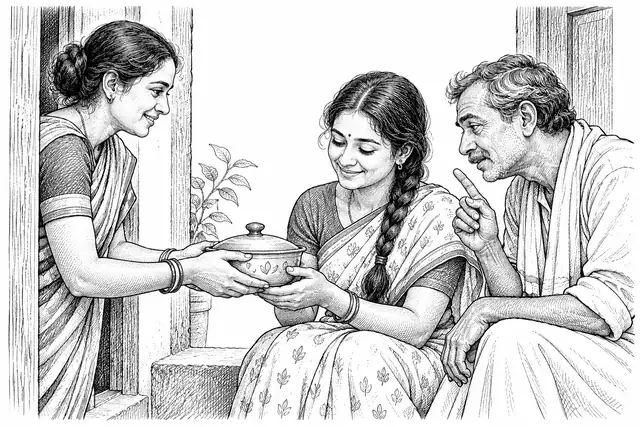
Original imagined example: ପାଠକମାନେ ଦୁଇଟି ଛବିର ସାଦୃଶ୍ୟ ଆଲୋଚନା କଲେ। ଧାଡ଼ିରେ ନଥିବା ଶେଷକଥା ଯୋଡ଼ିବାଠାରୁ ସେମାନେ ବିରତ ରହିଲେ। / Readers discuss the pairing without completing it with an invented maxim. This scene is original.
Cultural context
The unusual digital head spelling ଶ ଖାଇ ଦେବାବୁଦ୍ଧି is preserved in source metadata. The quotation’s spacing and dash remain exact; it is a labelled fragment, not a supplied claim of uselessness.