DHAGA 304 · dictionary-labelled saying; source-informed editorial reading
Near enough to attend to
ଦେଖାଦେଖି ଚାଷ, ଲଗାଲଗି ବାସ
ପାଖରେ ଥିବା ବିଶେଷଣର ଅର୍ଥ—ଯାହାକୁ ବାରମ୍ବାର ଦେଖି ବା ତାହାର ତତ୍ତ୍ୱ ନେଇହେବ। ଧାଡ଼ିଟି ଚାଷରେ ସେହି ସୁବିଧା ସହିତ ଲଗାଲଗି ରହିବାକୁ ଯୋଡ଼େ। ଆମ ପାଠ ପଚାରେ, ଦୂରତା କେଉଁ କାମର ତତ୍ତ୍ୱ ନେବାରେ ସାହାଯ୍ୟ ବା ବାଧା ଦିଏ। ଏହା ଘରବସତିର ନିୟମ ବା ଭଲ ଫସଲର ନିଶ୍ଚୟତା ନୁହେଁ।
Literal meaning
Cultivation where it can be regularly seen; dwellings close together.
What it means
The accompanying adjective means something that can often be seen or attended to. The line pairs that accessibility in cultivation with proximity in living. Our reading asks what distance permits us to notice and care for; it does not prescribe settlement density or promise better harvests.
When you might use it
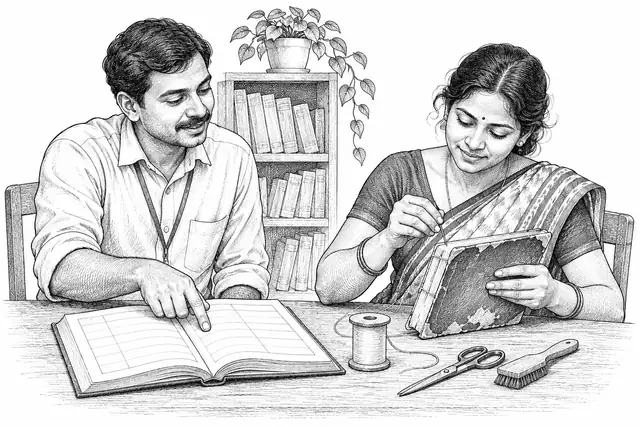
Original imagined example: ପାଠାଗାରର ମରାମତି ଖାତାଟି ଦୂର ଆଲମାରିରେ ରହୁଥିଲା। ସ୍ୱେଚ୍ଛାସେବୀମାନେ ତାହାକୁ କାମର ଟେବୁଲ ପାଖରେ ରଖିଲେ, ଯେପରି ରୋଜ ଦେଖିପାରିବେ। / Volunteers move a repair log near their worktable so they can check it daily. This practical analogy is invented.
Cultural context
This is the adjective-sense example, separate from the earlier river/kinship saying and later named literary line. No agricultural trial or universal village pattern is established.