DHAGA 215 · proverbial saying
A boast that puts the onlooker in place
କେତେ ଅନଉଛୁ ମତେ, ତୋଠଉଁ ସୁନ୍ଦର ମୋର ବିନୋଦିଆ, ଚାକର ରଖିବ ତତେ
କେହି ଚାହିଁରହିଥିବା ବେଳେ ଏହି କଥାର ବକ୍ତା ନିଜ ପ୍ରିୟଜଣଙ୍କ ସୁନ୍ଦରତାକୁ ବଢ଼ାଇ କହି ସେହି ଚାହାଣିର ଜବାବ ଦିଅନ୍ତି। ଚାକର ରଖିବାକୁ ଅଭିଧାନ ଏଠାରେ ଧନ ବା ଗୁଣରେ ଉତ୍କୃଷ୍ଟ ହେବାର ଲକ୍ଷଣାର୍ଥ ଦେଇଛି। ଯିଏ ନିଜକୁ ପ୍ରତିଦ୍ୱନ୍ଦ୍ୱୀ ଭାବୁଥାଇପାରେ, ତାକୁ ପ୍ରିୟଜଣଙ୍କଠାରୁ ବହୁତ ତଳେ ରଖିଦେବାରେ ଏହି ଉତ୍ତରର ଖୋଚା। ଏହା ନିଜ ପ୍ରିୟଜଣଙ୍କୁ ନେଇ ଗର୍ବ ସାଙ୍ଗରେ ମିଶିଥିବା ଏକ ନାଟକୀୟ ଜବାବ ଭଳି ଶୁଣାଯାଏ; ପ୍ରେମର ପରିସ୍ଥିତି ଏହାର ଗୋଟିଏ ସମ୍ଭାବ୍ୟ ପାଠ। କାମ ବା ସାମାଜିକ ସ୍ଥିତି ଦେଇ ମଣିଷର ମୂଲ୍ୟ ମାପିବାକୁ ଏହି ପାଠ ସମର୍ଥନ କରେନାହିଁ।
Literal meaning
Why keep looking at me? My charming one is more beautiful than you and could keep you as a servant.
What it means
The line answers someone who keeps looking at the speaker by praising another person as more beautiful. The dictionary explains “keep as a servant” here as figurative superiority in wealth or qualities, so the comparison is not a report of employment. One possible performance is a proud rebuff to an admirer: the speaker boasts that a favoured person would far outshine this supposed rival. Neither admiration nor a romantic relationship is fixed by the source gloss, however. The repeated address gives the comparison a personal, theatrical edge. Its status hierarchy is part of the rhetoric, not a measure of anyone’s human worth.
When you might use it
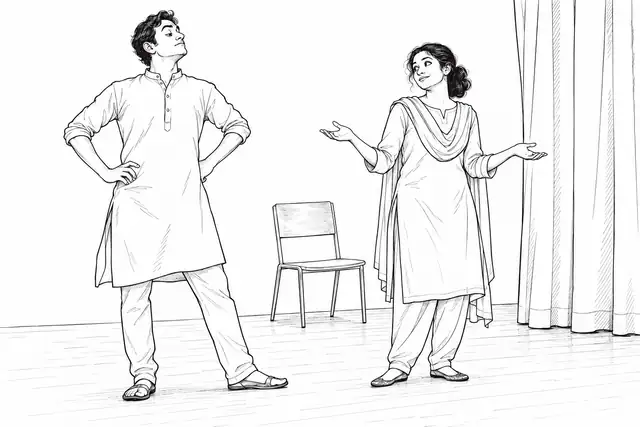
Original imagined example: During a light-hearted drama rehearsal, one character keeps posing to catch another character’s eye. The other quotes this line, praising someone supposedly more beautiful. The performers choose to play it as a proud rebuff to an admirer; that relationship is invented for this scene, not established by the dictionary. They treat the employment comparison as exaggeration rather than a reason to mock an occupation.
Cultural context
The source supplies a figurative status comparison, not a named romance or biographical episode. Charming one renders ବିନୋଦିଆ without fixing a romantic relationship; the speaker’s gender and any historical characters are not established. The employment hierarchy should remain visible as rhetoric without being endorsed.